The wrong ply selection is among the biggest mistakes that packaging companies can commit when expanding or building the corrugator line. The more plies you have doesn’t mean that they are better -the best selection is contingent on the type of product you’re packaging, what strength your boxes actually require, and the amount of floor and capital you’re willing to invest. In the next sections, we’ll explain what each configuration is is built for, how they compare, and how to match one to your production scale.
What Does “Ply” Mean in a Corrugator Line?
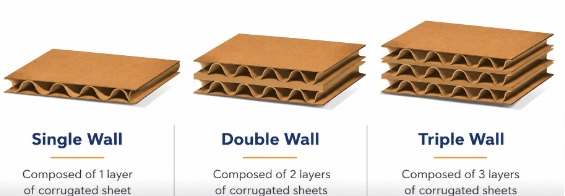
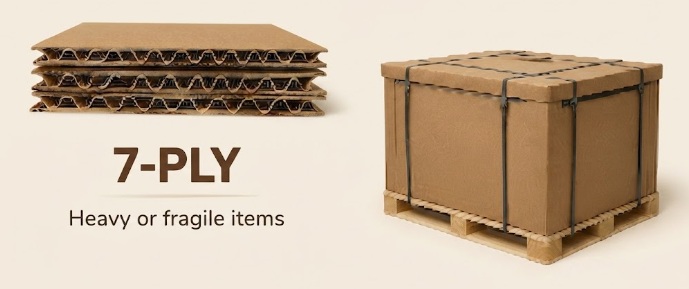
“Ply” refers to the number of layers of paper that are bonded to create elongated corrugated boards – comprised of flat lined (wavy) medium paper that is glued in alternating layers that alternate. A 3-ply sheet has one fluted layer sandwiched between 2 lined layers (single wall). A 5-plyboard combines two fluted layers and three lined layers (double wall), while a seven-ply board is made up of three fluted layers, paired with four lined layers (triple wall). Each layer added adds strength, thickness and compressive strength, but also increases costs, complexity of the machine and the time required for production.
3-Ply Corrugator Line: Best for Lightweight, Small Packaging
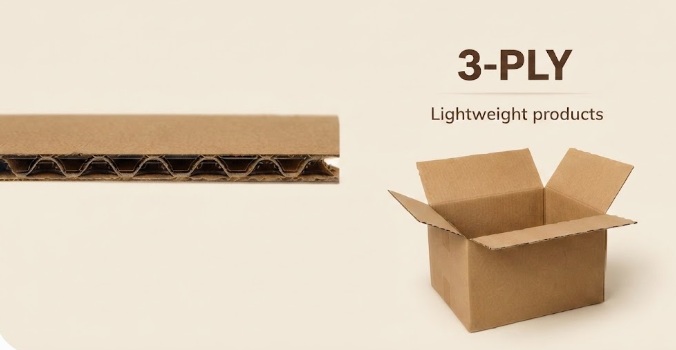
A 3-ply line creates single-wall boards, which are the lightest and most cost-effective corrugated structure. It’s ideal for mailers used in e-commerce, small packaging for consumer goods displays for retail, and other areas that require a lightweight product and does not need to endure excessive packing as well as rough handling.
The main advantages are lower equipment investment, a smaller factory footprint, and faster startup — making 3-ply lines a common entry point for smaller manufacturers or companies just beginning to scale their own converting operations.There is a tradeoff in the compressive strength, making the 3-ply board unsuitable for heavy items, long-distance shipping as well as multi-layer stacking for warehouses.
5-Ply Corrugator Line: The Industry Standard for General Packaging
A 5-ply line is the configuration most corrugated board manufacturers run as their core production line, and for good reason — it hits the balance point between strength and cost that fits the widest range of customer orders. Double-wall board from a 5-ply line comfortably handles appliances, food and beverage cartons, general industrial goods, and standard domestic shipping.
This is also the configuration most new factories should seriously evaluate first, since it offers the flexibility to serve multiple customer segments off a single line rather than committing early to a narrow niche. The majority of corrugated packaging demand worldwide remains in the general‑purpose category. This is one reason why single‑wall (3‑ply) and double‑wall (5‑ply) lines together comprise the majority of installed corrugator capacity worldwide.
7-Ply Corrugator Line: Built for Heavy-Duty and Export Packaging
A 7-ply line is a triple-wall board, designed for furniture, heavy machinery components big appliances, and export packaging that must be able to withstand long ocean journeys, multiple handling points as well as extended storage. In many cases, properly-designed triple-wall corrugated packaging is able to substitute wooden crates for less weight and at a lower cost which is a major reason for the increased demand in export-oriented manufacturing areas.
The trade-offs are substantial, however: 7-ply equipment will require a higher capital investment as well as more floor space. more precise control of glue and paper quality, and generally operates with a slower speed than the 3-ply and 5-ply versions due to the addition of drying and lamination steps. A line that is 7-ply is financially viable when the orders are in large quantities and demand for high-quality packaging is sufficient to justify the expense.
3-Ply vs. 5-Ply vs. 7-Ply: Key Differences at a Glance
| Factor | 3-Ply | 5-Ply | 7-Ply |
| A typical application | Light retail packaging, e-commerce | Industrial and consumer general products | Heavy machinery, furniture, export crates |
| Strength of compression | Low to moderate | Moderate to high | Highest |
| Production speed | Fastest | Moderate | Slowest |
| Equipment investment | Lowest | Moderate | Highest |
| Ideal for | Small/start-up companies | Most general-purpose factories | Export-focused, high-volume or heavy-duty factorie |
Production Capacity Considerations for Each Configuration
More plies generally mean a lower maximum line speed, since each additional layer requires an extra lamination and drying stage before the board reaches full strength. A 3-ply line can typically run at the highest speeds a corrugator platform supports, while 5-ply and especially 7-ply lines trade some speed for the added lamination process. This matters when planning capacity: a factory sizing its output purely on square meters of board per shift needs to account for the fact that a 7-ply line producing the same daily tonnage as a 3-ply line will usually require either a longer operating window or a wider working width to compensate for the reduced speed.
How to Decide: Matching Corrugator Line Configuration to Your Business
Instead of beginning with “which configuration sounds most advanced,” begin working backwards to your production requirements:
- What do you pack? Light consumer goods are pointing toward 3-ply or 5-ply, while heavy furniture, machinery or export freight points towards 7-ply or 5-ply.
- What is your current and anticipated quantity of orders? A setup that meets the current demand, but doesn’t leave possibility of growth over the next 3 to 5 years can result in a costly upgrade early.
- What is your factory’s footprint and budget limit? 7-ply lines require a lot more space for floor and capital than 5-ply or 3-ply configurations.
- What do your clients’ handling and shipping conditions need? If your client base frequently ships internationally or stores product in warehouses for long time periods, the requirements for board strength will be the main factor to consider more than upfront costs.
- What do your customers’ shipping and handling conditions demand? If your customer base regularly ships overseas or stacks product in warehouses for extended periods, board strength requirements should drive the decision more than upfront cost.
Can You Upgrade or Combine Configurations Later?
Certain designs of corrugator line permit additional single-facer or laminated machines to later be added on, permitting a facility to grow from a 5-ply setup to a 7-ply option without having to rebuild all of the wet ends. This isn’t the case with every piece of equipment, however -it is contingent on the way in which the line was originally constructed, the amount of space that was set aside for the future unit, and if your control and drive elements were specifically designed to handle the additional capacity. If you’re certain that you’ll require a heavier board in some time you should discuss expanding layout alternatives with the equipment manufacturer prior to finalizing the initial layout.
There’s no universally “best” ply configuration — only the one that matches your product mix, order volume, and growth plans. 3-ply suits light, cost-sensitive packaging; 5-ply covers the broadest range of general industrial and consumer applications; and 7-ply is built for heavy-duty and export packaging where strength justifies the added investment.
If you’re planning a new corrugator line or evaluating whether your current configuration still fits your production scale, Hsieh Hsu’s engineering team can help assess your product requirements and recommend the right line configuration for your factory.