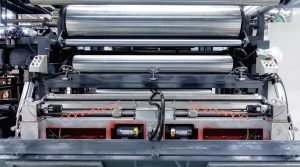
A corrugating roll is a deceptively simple-looking machine, two steel cylinders with a tooth pattern cut into the surface. That pattern will tell you whether the board leaving your single facer will be consistent flutes or a stack of rejects. Selecting the right corrugating rolls isn’t just a matter of picking a letter (A, B, C, E or F) and hoping it will fit. Flute geometry, roll dimensions, machining accuracy and machine compatibility must be matched. This guide will assist you to choose corrugating rolls for each flute profile and what to look for before ordering.
Why Flute Profile Matters When Selecting Corrugating Rolls
A roll’s model number or outside diameter doesn’t tell you what it will produce. The tooth profile cut into the roll shapes the medium paper into its final flute. So the roll sets flute height, flute pitch and how uniform the flutes are across the full web width.
When the roll and the target flute don’t match, the effects show up downstream: unstable flute shape, caliper variation, weak flute tips that crush during lamination, and lower board strength. Fixing these problems at the converting stage is expensive. It is much cheaper to get the roll right the first time.
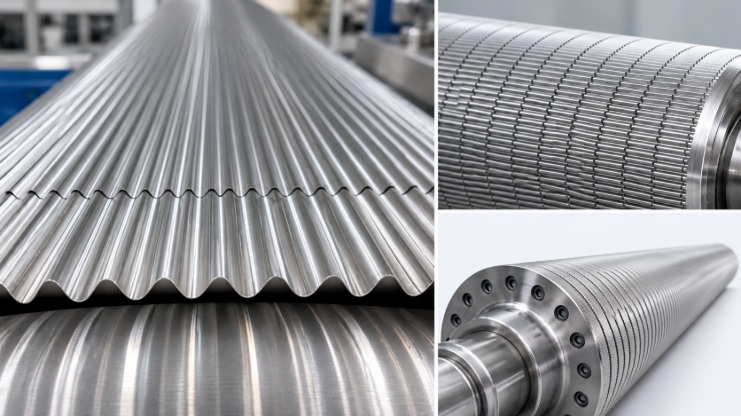
Understanding Corrugating Roll Requirements for Different Flute Profiles
Flute size is generally determined by flute height and the number of flutes per foot. Counting flutes per linear foot is a more reliable method of identifying flute size than measuring board thickness, which varies with manufacturing conditions. That is also the way roll tooth profiles are specified. Typical US reference values are below.
| Flute | Flutes per foot | Flutes per meter | Approx. flute height | What to watch in roll selection |
| A | 33 ± 3 | 108 ± 10 | ~4.7–4.8 mm | Tooth height, forming stability |
| B | 47 ± 3 | 154 ± 10 | ~2.5 mm | Pitch accuracy, tooth consistency |
| C | 39 ± 3 | 128 ± 10 | ~3.6 mm | Balance of quality and uptime |
| E | 90 ± 4 | ~295 | ~1.2 mm | Fine-tooth precision, surface finish |
| F | ~125–128 | ~420 | ~0.8 mm | Tightest tolerances, running stability |
Sources: Wikipedia’s standard US corrugated flute table and a packaging standard published by Snap-on. Height figures vary by source.
These are typical industry values and not universal constants. Standards, manufacturers & mills are all different so always check the exact tooth dimensions against your own drawings.
A-flute rolls. The tallest teeth and widest pitch put the focus on tooth height and on stable forming, since taller flutes are easier to deform.
B-flute rolls. The denser tooth pattern makes pitch accuracy critical. Small errors repeat across many teeth, and they show up quickly as uneven board.
C-flute rolls. C is the most common flute in corrugated boxes, so these rolls usually run long hours. Wear resistance and consistency matter as much as the profile itself.
E- and F-flute rolls. Micro-flute teeth are small and shallow. Any machining error, surface defect or runout is large relative to the flute, so tolerance and finish become the main selection criteria.
Flute profile also affects how much medium paper the roll consumes. A B flute, for example, has a take-up ratio of about 1.33, meaning the medium runs faster than the board leaves the machine. Your roll supplier should know the take-up factor your production relies on.l problems in the subsequent processing. Due to the influence of equipment type and product design, dimensional deviations can lead to unstable paper feeding, printing misalignment, and die cutting failure.

Key Factors to Consider When Choosing Corrugating Rolls
Flute profile and tooth geometry. Tooth height, pitch, tip and root radius, and flank angle all affect how the medium is formed and released. Two rolls labeled “C-flute” can have different geometry and produce slightly different results. Give the manufacturer a drawing or a sample, not just a letter.
Roll diameter and working width. These must match your single facer’s frame, bearings and drive. A roll that is correct in profile but wrong in diameter or face width simply won’t fit. Check your machine records, then measure the existing rolls.
Material and surface treatment. Corrugating rolls are used with steady contact, heat, and abrasion. The material and surface work decide how long the profile stays in shape. Ask the supplier to put the real material grade and the treatment steps in writing. Do not rely on statements that give hardness or service life without proof.
Machining accuracy and flute consistency. Issues like runout, evenness from tooth to tooth, and the final surface can change caliper readings. This matters most for the small flutes, where the allowed tolerance is tightest.
Production rate and conditions of operation. High speed lines require more balance and heat management and wear. Tell the supplier your actual running speeds, the paper grades you run and any known problems such as premature wear.
How to Match Corrugating Rolls with Your Existing Corrugator
Don’t treat the flute letter as a compatibility guarantee. Before ordering, confirm these:
- Single facer brand, model and structure
- Roll diameter, working width, mounting method and connection details
- Target flute and the products you’ll make
- Real operating speed and conditions
- Whether you need to change flutes frequently
If you change flutes often, ask whether the roll design allows for quick changeover. If you are replacing worn rolls, please forward old rolls or detailed drawings.
What Information to Provide When Ordering Corrugating Rolls?
When you send full information suppliers can quote more quickly and accurately. Create a checklist:
- Corrugator or single facer model
- Existing roll dimensions (diameter, face width, journal details)
- Required flute profile, with drawings or samples
- Working width
- Production speed and operating conditions
- Material and surface treatment requirements
- Whether this is a replacement or a new production requirement
What should I consider when selecting corrugating rolls for E-flute? Obtain the exact E-flute tooth geometry required and then consult the manufacturer for tolerance and surface finish capabilities. Check diameter, width and mounting to fit your single facer. Good flutes allow little room for error in the quality of machining.
Choosing Corrugating Rolls for Production Requirements
The right corrugating rolls match more than the target flute. They also need to fit your machine, hold tolerance, and continue to run at your production speed over time. Request a quote. Indicate the complete geometry. Confirm compatibility and provide complete information.
If you are looking for a roll replacement, a new flute profile or a machine matching question, please contact Hsieh Hsu Machinery. Our team can go over your corrugator details and assist you in defining the correct corrugating roll spec.