Corrugating rolls rarely fail overnight. They wear a little every shift, and a complaining customer about weak boxes is often the first warning. You may have spent weeks at that point losing board strength, feeding the line heavier paper and burning extra steam. The real question is not if your rolls are going to wear out, but when to intervene. Generally, light even wear on a sound roll body can be reground, but severe or structural damage suggests replacement.
Why Roll Wear Matters More Than You Think
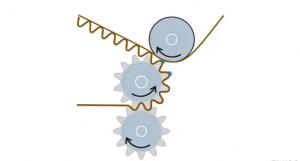
The corrugating rolls shape the hot paper in a wave pattern, which gives the corrugated board its stiffness. The roll surface holds the dimensions . Each type of flute at a given height and pitch . The B-flute is generally quoted at about 2.5 mm height so a loss of only 0.1 mm at the flute tip represents about a 4% change in profile. Looks small on a roll but on the board looks like thinner sheets , Softer.
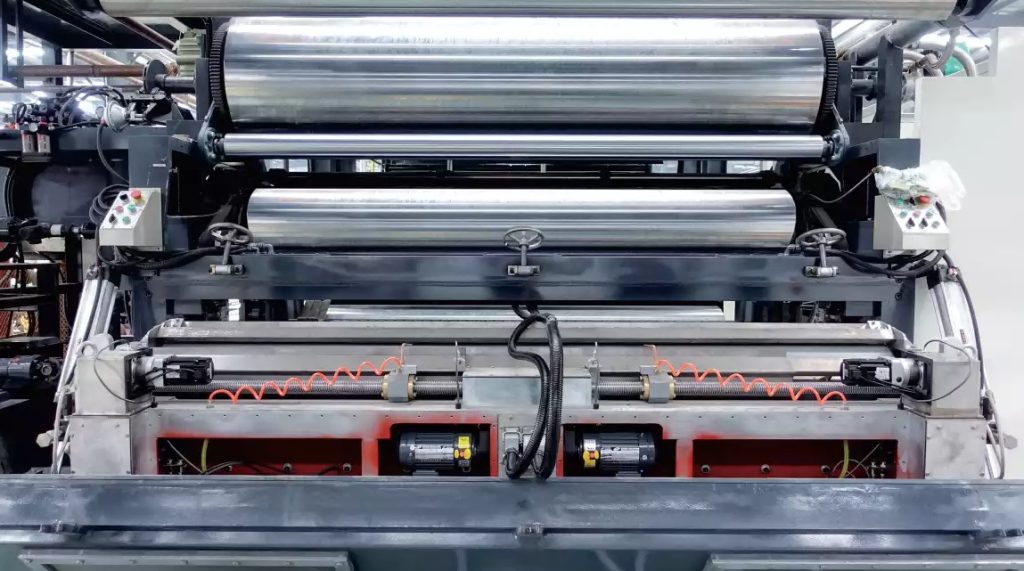
Common Signs of Corrugating Roll Wear
Wear reveals itself in three distinct areas: the roll itself, the finished board, and even your plant’s utility costs.
Visual and surface indications
Examine the roll surface for telltale changes carefully. Flute tips can become rounded or flattened and scratches, pitting, corrosion and isolated spots of damage can also develop. You may also see an uneven finish running the entire length of the roll.
Indications of performance
Board quality is directly affected by degraded roll geometry. Flute height can drop or become inconsistent which drags down flat crush and edge crush test values. The medium is more prone to tearing and wrinkling. Often, crews will just turn the line pressure or temperature up just to try and offset these issues.
Signs of operation
Worn rolls add to running costs and involve extra work. Steam and energy use is increasing and the line may begin to run with noticeably more noise or vibration. You will see more off-spec waste and more frequent adjustments and tweaks to keep production on-track.
The simplest rule of thumb is: if you see two or more warning signs in different categories, schedule a formal inspection as soon as possible.
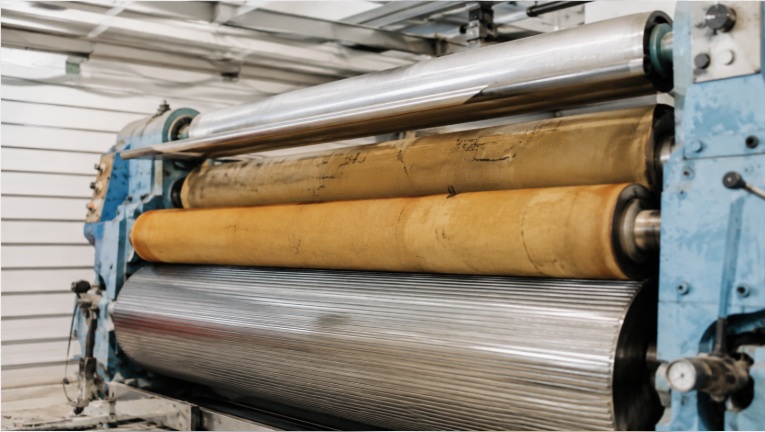
How Worn Rolls Affect Flute Profile, Board Quality, and Stability
Flute profile. Worn tips produce shorter, rounder flutes with inconsistent pitch. The board gets thinner and less rigid.
Board quality. Board strength is tied to flute shape. When flute definition gets worse, results from common industry checks can slip. This includes edge crush tests (ISO 3037 / TAPPI T 811) and flat crush tests (ISO 3035 / TAPPI T 825). If the flute geometry is poor, glue bonding can be weaker too. It can also lead to warp or a rough, uneven surface.
Production stability. When the board runs weaker, operators try to fix it by raising pressure or adding more heat. Some also switch to a heavier paper. Running speed then gets harder to keep steady. Small changes stack up, and the number of adjustments grows.
The hidden cost. Using heavier paper to hit strength targets, reworking rejected orders, and handling complaints usually cost far more than timely roll maintenance. Running worn rolls is rarely the cheap option.
When to Think About Regrinding?
Regrinding removes a small amount of material and restores the flute profile and surface. It’s usually a good choice if:
- Wear is mild to moderate and fairly even across the roll
- Flute tips are blunted, but the roll body has no structural damage
- Surface scratches are shallow enough to be ground out
- Roll diameter is still above the minimum allowable size
- Runout and concentricity are within a correctable range
What regrinding can do: restore flute contour, surface finish and dimensional accuracy often at lower cost and shorter lead time than a new roll.
What it can’t do: fix deep cracks, deformation, material fatigue, or a roll that’s lost too much diameter already.
Many rolls also have a surface treatment after grinding to improve wear resistance . Confirm availability of the options with your roll supplier.
When to Consider Replacement Instead
If the wear is so excessive or uneven that the grinding allowance would be excessive, or if the diameter is already close to its limit, then replacement is well worth serious consideration. A roll that has been reground many times, has cracks or heavy corrosion, or has lost its surface treatment over large areas is usually nearing the end of its useful life. Also applies if you can’t regain accuracy after regrinding.
Business needs count, too. When changing flute type, running at higher speeds, or meeting tighter customer specs, a new roll might be a better choice than trying to restore an old profile.
| Factor | Regrind | Replace |
| Best for | Mild to moderate, even wear | Severe or structural damage |
| Cost | Generally lower | Generally higher |
| Lead time | Usually shorter | Depends on custom manufacturing |
| Flute change | Restores the existing profile | Allows a new flute type |
| Long-term value | Rolls with material left | Rolls beyond economic repair |
What to Check After Regrinding
A reground roll should never be put straight back on the machine without being checked. First of all check the flute itself, height, shape and pitch determine the thickness and strength of the board. Next is the roll diameter and has to be within limits and match its mating roll. Radial runout and concentricity need to be closely monitored, as errors here result in uneven pressure and vibration.
Then, there’s surface roughness and hardness. The roughness will affect how clean the paper comes off and how fast the roll wears out. The hardness will check the ability of a surface treatment to hold up. If your roll design has crown check that also as it maintains contact across the width. Dynamic balancing is vital for high-speed lines. Finally, test the roll against its partner, because a good roll may still perform badly if it is mismatched with its partner.
Acceptable tolerances vary from machine to machine and from process to process, so check each result against your own specs, not some arbitrary number.
How to Develop a Corrugating Roll Maintenance Plan
Step 1: Log data for the roll. Log machine model, roll size, material, flute type, installation date, cumulative output.
Step 2: Inspections should be carried out frequently. Flute profile and diameter should be visually checked daily and measured periodically. Trends are more important than single readings.
Step 3: Locate Trigger Points. Set limits for flute height loss, board test results or steam consumption. Once a threshold is met, begin evaluation.
Step 4: Make the plan fit your operation. Typically, faster lines with board grades and treated roll surfaces require tighter inspection intervals than slower, lighter duty production.
Step 5: Downtime and spares planning. A spare roll set lets you rotate rolls and regrind without halting production.
Need Help With Assessing Your Corrugating Rolls?
Identifying signs early, honest damage assessment, checks after regrinding and sticking to a planned schedule will safeguard board quality and your budget. If you are not sure whether to regrind or replace, send us your roll details: model, dimensions, flute type, machine and speed, usage history and photos or drawings.