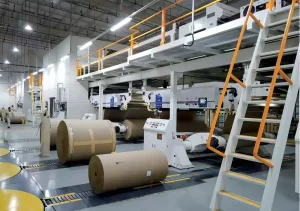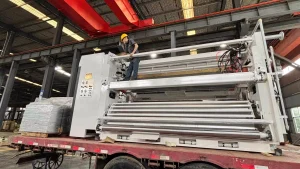
A corrugated board production line comprises various machines that function together for the purpose of processing paper rolls to form the final product known as corrugated boards. Each unit serves a unique function; however, the efficiency of the process is based on the interaction between these machines.
A typical corrugator line is normally made up of two major parts – the Wet End and the Dry End. The former is responsible for the formation and bonding of the board, whereas the latter cuts, scores, and stacks the board. Knowing how these two sections interact will make it easier to understand the process of corrugated board production.

How Wet End and Dry End Connect in a Corrugator Line
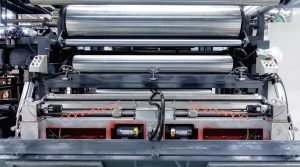
The Wet End handles paper feeding, corrugating, and bonding, while the Dry End processes the continuous board into finished sheets. Each section contains several machines that perform different tasks.
The following table highlights some of the main equipment commonly used in these two sections:
| Section | Main Equipment | Main Function |
| Wet End | Shaftless Hydraulic Mill Roll Stand | Holds paper rolls and feeds paper into the production line |
| Wet End | Preheater | Heats and conditions the paper before corrugating and bonding |
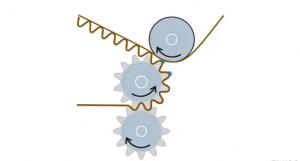
| Wet End | Single Facer | Forms the fluted medium and bonds it with a liner |
| Wet End | Glue Machine | Applies adhesive to the flute tips |
| Wet End | Double Backer | Bonds the second liner to the corrugated medium |
| Wet End | Overhead Bridge Conveyor | Temporarily stores and transfers single-faced board to the next production stage |
| Dry End | Rotary Shear | Trims or cuts board sections as required by the production process |
| Dry End | N.C. Scorer Slitter | Slits the board to the required width and creates score lines |
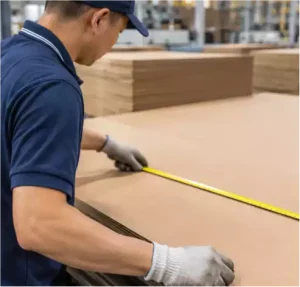
| Dry End | N.C. Helical Cut-Off | Cuts continuous corrugated board into sheets of specified lengths |
| Dry End | Diverter Device | Directs finished sheets to different delivery or stacking lanes |
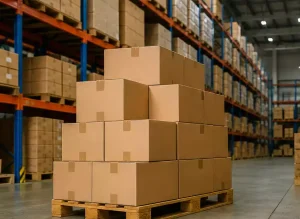
| Dry End | Auto Downstacker | Collects and stacks finished corrugated sheets |
In a typical corrugator line production process, paper rolls first pass through the Wet End, where the fluted medium is formed and bonded with liner paper. The resulting board then moves through the Dry End for slitting, scoring, cutting, and stacking.
Paper Feeding → Preheating → Corrugating and Bonding → Board Transfer → Slitting and Scoring → Cut-off → Sorting and Stacking
The exact equipment configuration may vary depending on the production line
Why Speed Synchronization Matters
Speed coordination is essential because the Wet End and Dry End are connected through a continuous board conveying process.
If their operating speeds are not properly matched, production problems may occur.
| Situation | Possible Result |
| Wet End runs faster than Dry End | Excess board may accumulate in the conveying section |
| Dry End runs faster than Wet End | Board feeding may become unstable |
| Frequent speed changes | May interrupt continuous production |
| Poor coordination between machines | Can reduce overall line efficiency |
Modern corrugator lines use coordinated control systems to help maintain suitable operating speeds across different sections.
When production speed changes, connected machines need to respond accordingly. This helps reduce unnecessary interruptions and keeps the production process running smoothly.
How Wet End Conditions Affect Dry End Performance
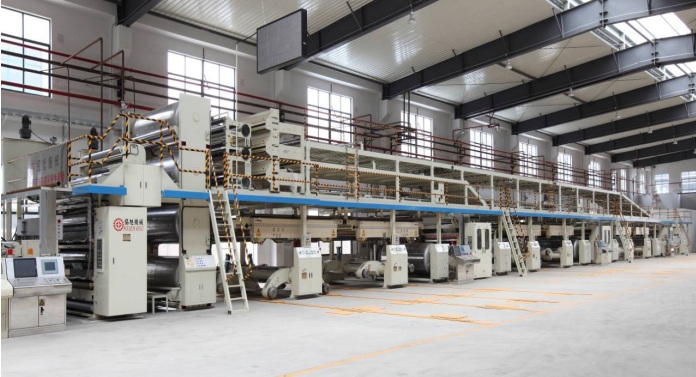
The quality of the board produced at the Wet End directly influences how easily it can be processed at the Dry End.
Some common examples include:
- Board warping: Curved or uneven sheets can make feeding and positioning more difficult.
- Uneven bonding: Poor bonding affects board strength and may cause problems during subsequent processing.
- Inconsistent board thickness: Differences in thickness can influence slitting, scoring, and other processing operations.
- Flute deformation: Damaged flute structures may affect the board’s appearance and final quality.
These problems cannot simply be corrected by the Dry End equipment. Stable board formation and bonding at the Wet End provide a better starting point for downstream processing.
At the same time, the Dry End needs suitable machine settings to handle different board specifications. Both sections contribute to the quality of the finished sheets.
Coordinating Both Ends During Production Changes
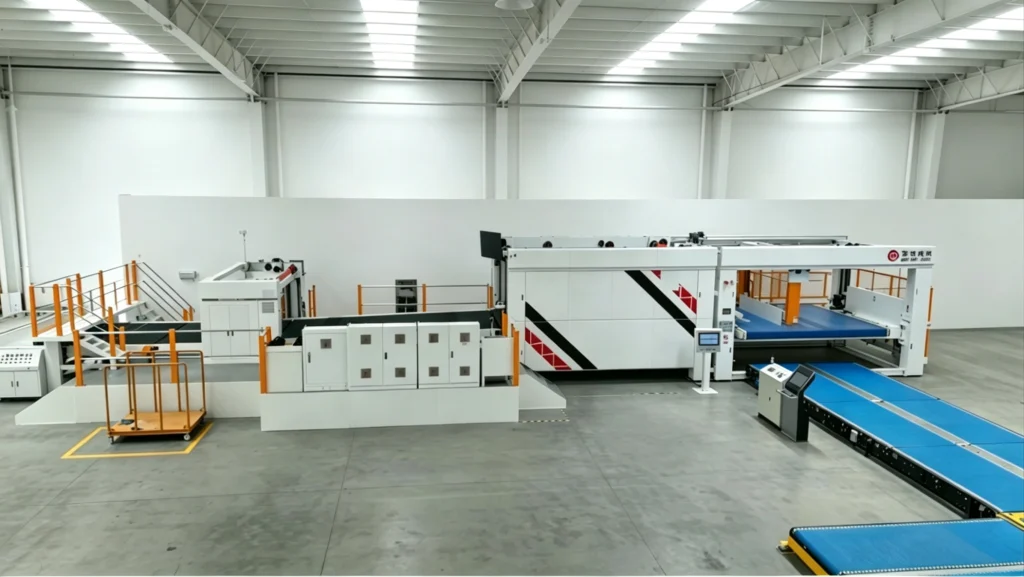
Corrugated packaging factories often handle different orders throughout the day. Changes in flute type, board width, sheet length, and order quantity may require adjustments across the production line.
For example:
When changing flute types:
- The Wet End needs to adjust the relevant corrugating setup.
- The Dry End must accommodate the corresponding board thickness and processing requirements.
When changing board dimensions:
- The production setup needs to match the new order specifications.
- Slitter scorer positions and cut-off lengths need to be adjusted.
- Stacking settings may also need to change.
For factories handling frequent order changes, automated adjustment systems can help reduce setup time and make production transitions more efficient.
Why the Entire Corrugator Line Needs to Be Evaluated as One System
When selecting or upgrading a corrugated board production line, evaluating individual machines is not enough. The configuration of the entire line should match the factory’s production requirements.
Several factors deserve attention:
| Consideration | Why It Matters |
| Working Width | Determines the board sizes the line can handle |
| Production Speed | Affects the overall production capacity |
| Machine Configuration | Ensures the Wet End and Dry End are properly matched |
| Automation Level | Influences production adjustments and operating efficiency |
| Factory Layout | Affects equipment arrangement and material flow |
Similarly, a high-speed single facer will not ensure high production overall if the following machinery cannot cope with the same demands.
It is aimed at creating the corrugator line in which all sections work in unison starting from feeding the paper to the stacking of the sheets produced. By means of reasonable equipment configuration and coordinated operation, manufacturers can maintain stable production and handle different orders more efficiently.
For factories that are going to create a new plant or update their equipment, it would be a significant move to select a whole corrugated board production line based on their production demands.