Some corrugated boxes may look similar, but they vary greatly during storage, loading and transportation: some do not deform under heavy pressure, while others bulge at the sides and the corners collapse directly.
This is the result of the combined influence of the strength of the corrugated board, the size of the box, the structural design, the degree of moisture absorption and the production process. By understanding these key points, the packaging factory can select the right materials and conduct effective pressure resistance assessments, thereby reducing the damage to the boxes during storage and transportation.

What Factors Affect the Compression Strength of a Corrugated Box?
Compression resistance of a fabricated box depends on the characteristics of the corrugated cardboard, the dimensions of the box, and the environment the box is exposed to during storage and transportation. The manufacturing process becomes another crucial factor.
Corrugated Board Strength and Thickness
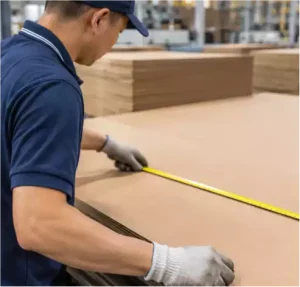
The strength of corrugated cardboard is a key indicator determining the vertical load-bearing capacity of a carton. The core factors to consider are two: edge pressure strength and cardboard thickness.
The edge pressure strength test (ECT) is used to measure the ability of the corrugated cardboard to resist compression at the edges. Generally, the higher the ECT value, the better the stacking load-bearing capacity of the carton. However, relying solely on ECT cannot fully determine the actual performance of the finished carton.
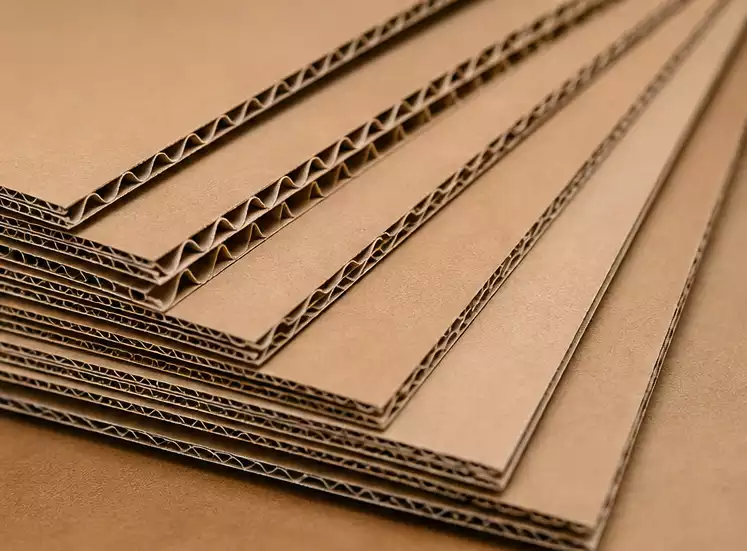
The grade of the paper and the corrugation type are also important. The face paper is the outer layer of the carton, while the corrugated core paper separates the top and bottom papers and determines the structural performance of the cardboard. Different paper types combined with different corrugation structures result in different strengths, hardness, and thickness of the finished carton.
Thicker cardboard does indeed enhance the compressive strength, but thicker cardboard does not necessarily mean a more sturdy carton. Other factors such as the quality of the base paper, the adhesion effect of the coating, and the overall structure must also be taken into account.
Box Dimensions and Structural Design
The shape of the carton will alter the distribution of pressure on the box walls. The perimeter, height, aspect ratio, and panel size all affect the pressure resistance performance.
The corners of the box are the main load-bearing positions. When under pressure, the box walls are prone to bending and bulging; under the same material conditions, a taller and wider box surface will have a weaker pressure resistance capacity than a shorter box.
Holes (hand holes, ventilation holes, display windows) will weaken the box wall structure, creating weak points that are more prone to deformation.
Therefore, the pressure resistance value estimated based on standard rectangular boxes is not applicable to cartons with large openings or special shapes. Such products require actual measurement or professional calculation.
Humidity and Storage Conditions
Moisture can significantly reduce the compression strength of corrugated packaging. Paper-based materials absorb moisture from the surrounding air, which can weaken their structure and reduce their stiffness.
This becomes particularly important in humid warehouses, refrigerated storage areas, and transportation environments where temperature changes may cause condensation. Even a box that performs well under controlled laboratory conditions may lose strength during prolonged exposure to moisture.
Stacking duration is another consideration. A box that withstands a short compression test may gradually deform under a sustained load, especially when humidity is elevated.
Packaging manufacturers should therefore consider the expected storage period, warehouse conditions, and shipping environment when specifying box strength. Selecting a board grade based only on its initial test result may not provide sufficient protection throughout the distribution cycle.
Manufacturing and Handling Quality
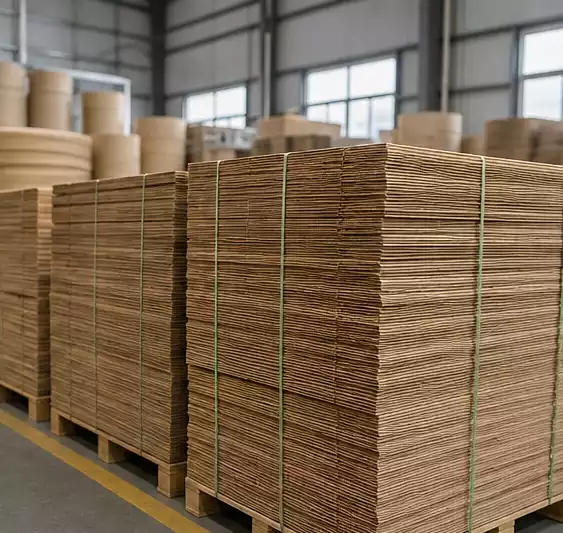
Even when the specified board grade is appropriate, manufacturing defects can reduce the strength of the finished box.
Poorly formed creases, damaged corners, weak joints, and inconsistent adhesive bonding can affect how evenly the box distributes a vertical load. Rough handling can also crush edges or deform panels before the box reaches its final destination.
Printing and converting operations deserve attention as well. Excessive pressure, damaged surfaces, or poorly positioned cutouts can affect the structural integrity of the board.
Consistent manufacturing quality is therefore essential. Checking board specifications alone is not enough; finished boxes should also be inspected for dimensional accuracy, visible damage, and defects that could affect stacking performance.
How to Calculate the Compression Strength of a Corrugated Box
Using the McKee Formula
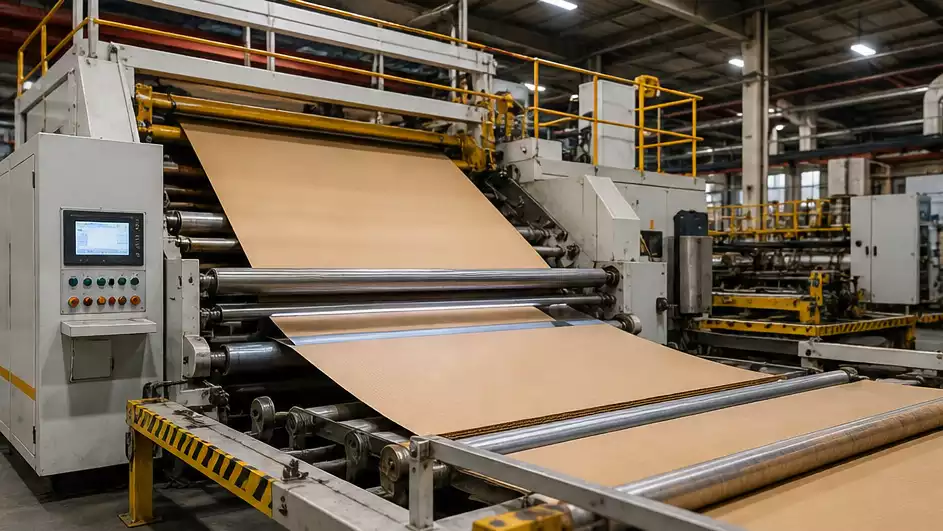
The simplified McKee formula is widely used to estimate the top-to-bottom compression strength of standard corrugated boxes. It relates the expected box compression strength to three measurable properties: edge crush strength, box perimeter, and board thickness.
The formula is:
BCT = 5.87 × ECT × √(P × T)
Where:
- BCT = estimated box compression strength, in pounds-force (lbf).
- ECT = edge crush strength of the corrugated board, in pounds-force per inch (lb/in).
- P = inside perimeter of the box, in inches.
- T = combined thickness of the corrugated board, in inches.
The inside perimeter is calculated as:
P = 2 × (inside length + inside width)
The coefficient and units must be used consistently. The formula above uses the inch-based unit system; values measured in metric units should not be substituted directly without using an appropriately converted formula.
The McKee formula provides an estimate rather than a guaranteed performance value. It is most useful for conventional box designs, such as regular slotted containers, where its underlying assumptions are reasonably satisfied.
A Step-by-Step Calculation Example

Consider a standard corrugated shipping box with the following specifications:
- Edge crush strength: 44 lb/in
- Inside length: 16 inches
- Inside width: 14 inches
- Board thickness: 0.16 inches
Step 1: Calculate the box perimeter.
P = 2 × (16 + 14) = 60 inches
Step 2: Insert the values into the McKee formula.
BCT = 5.87 × 44 × √(60 × 0.16)
BCT ≈ 800 lbf
The estimated box compression strength is therefore approximately 800 pounds-force under the assumptions of the simplified formula.
This figure represents an estimated compression test result, not the maximum safe stacking weight. The actual load a box can support in storage will depend on factors such as load duration, humidity, stacking configuration, and the required safety margin.
When the Calculation Needs Verification

When the working conditions are harsh and the box shape is special, calculations cannot replace actual measurements.
For cartons with large openings, ventilation holes, and irregular proportions, the McKee formula has a large estimation deviation. Relevant studies also show that the openings on the box walls will affect the compressive strength, and the standard formula is difficult to cover such effects.
Accuracy of the formula is dependent on the input parameters. If the edge pressure, paperboard thickness, and major commodity are not constant, the computed data will not make sense.
In case of new packaging plans, valuable commodities, or loading conditions, the manufacturing company has to measure and verify rather than just calculating.
How to Verify the Compression Strength of a Corrugated Box
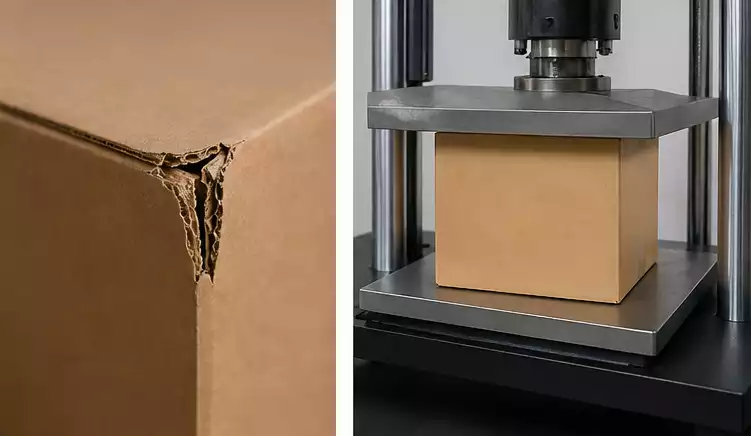
Box Compression Test (BCT) is conducted to measure the load-bearing strength of the final box: Put the box between two pressure plates and subject it to compression pressure until deformation or breakage occurs.
The ECT tests the edge compression strength of the cardboard itself, whereas the BCT is carried out on the formed boxes only, thus taking into account the total performance of the product produced from the cardboard according to the design and joining processes.
In order to get correct results, it is necessary that the sample corresponds to the batch produced. In other words, there must be no variations in the characteristics of the cardboard, dimensions, and the process; also the temperature and humidity must be constant.
If the package is designed to be used in extreme conditions, then other tests are needed.
By comparing the theoretical calculated values with the BCT test results, it is convenient for manufacturers to predict deviations. Once the actual test results do not meet the standards, the materials, box design, and production quality should be investigated, and then a new adjustment plan should be considered.
Match Box Strength to Real Packaging Requirements
Corrugated board compressive strength depends on more than base paper grade and thickness; board properties, box size, structure, environment and production quality also matter.
The Mackey formula gives a preliminary compressive estimate, which must be evaluated against real stacking and transit conditions. Specially designed or high-performance boxes require physical testing.
Packaging manufacturers can select proper box strength and cut transit crush damage through material matching, box design optimization, consistent production and realistic testing.