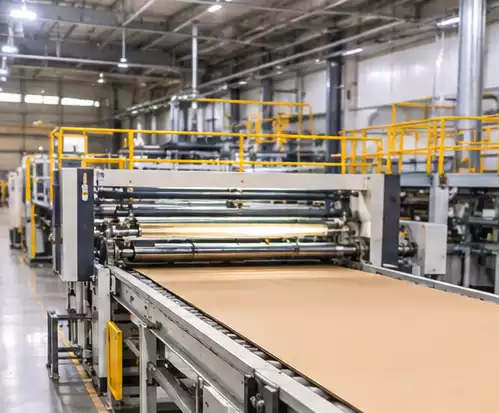
Cutting is the final process in the production of corrugated cardboard. After the paperboard is formed, adhered, and then cut and scored, it is sent to the paper cutter to be cut into single sheets of the specified size.
This seems to be an easy procedure, but what makes the difference is the cutting accuracy, which determines the final size of the product as well as the stability of the production process. Any mistake in length can result in material loss, influence the next stages of the production process, and even fail to meet the order requirements.
The Role of Cut-Off Accuracy in Corrugated Board Production
Cut-off accuracy refers to the degree of conformity between the actual length of the paper and the preset cutting length. On the corrugated paperboard production line, the cutting machine must coordinate the movement of the blade with the speed of the paper board to produce paper of uniform size.
Accurate cutting serves several important purposes:
- Ensure uniform paperboard size and stable size for orders of the same batch;
- Adhere to customer specification requirements and meet the delivery standards of the orders;
- Increase material utilization rate and reduce waste and trimming losses caused by cutting deviations;
- Ensure smooth subsequent processes and provide stable conditions for processing such as printing, die-cutting, and box-filling.
Cutting accuracy is therefore not just a machine performance indicator. It is also an important part of overall production quality control.
Production Problems Caused by Inaccurate Cut-Off Lengths
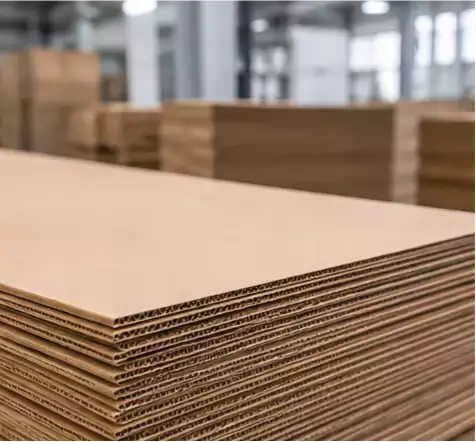
When actual sheet lengths differ from the required dimensions, the effects may extend beyond the cutting station.
| Production area | Possible impact |
| Sheet dimensions | Inconsistent lengths within the same production batch |
| Material utilization | Extra trimming or rejected sheets |
| Printing and die-cutting | Inconsistent sheet dimensions may affect feeding, positioning, and processing layouts |
| Box converting | Incorrect blank dimensions can affect finished box sizes |
| Order management | More inspection, sorting, and rework may be required |
Once the cutting length exceeds the tolerance range, it can easily cause potential problems in the subsequent processing. Due to the influence of equipment type and product design, dimensional deviations can lead to unstable paper feeding, printing misalignment, and die cutting failure.
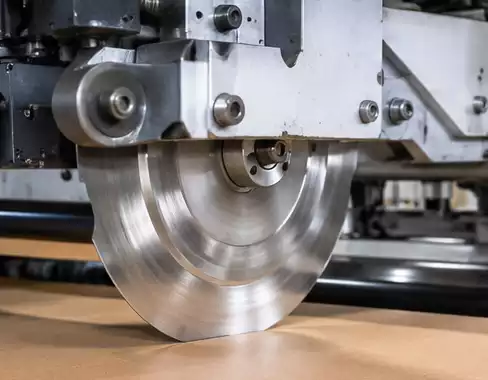
The forming effect of the carton directly depends on the size of the corrugated paperboard billet. Even a small cutting error requires on-site repeated machine adjustment, and a large error can result in the production of unqualified cartons.
The deviation of a single sheet of paperboard may not be noticeable, but if it occurs continuously during mass production, it will cause serious production losses.
What Affects Cut-Off Accuracy on a Corrugator Line?
There are many factors that affect the cutting accuracy. Some are related to the machine control, while others are related to the mechanical conditions and the processing of the sheet materials.
1. Sheet Speed Measurement and Synchronization
The paper cutter must precisely track the movement of the corrugated cardboard. If the measured paper speed does not match the actual conveying speed, the cutting blade may not reach the correct position at the required time.
Reliable speed measurement and synchronization between the paper feeding system and the paper cutting mechanism are crucial for ensuring the consistency of the cutting length.
2. Cutting Length Settings
Incorrect production order settings can directly result in sheets being cut to the wrong dimensions. Errors may occur when entering new cutting lengths, switching between orders, or recalling stored production data.
Operators should verify the programmed dimensions before starting each new order.
3. Mechanical Wear and Transmission Conditions
Wear of the transmission components, loosening of the connections, or changes in mechanical position can all affect the stability of the cutting mechanism. Over time, these conditions may reduce the consistency of the cutting process, especially during continuous high-speed operation.
4. Blade Condition
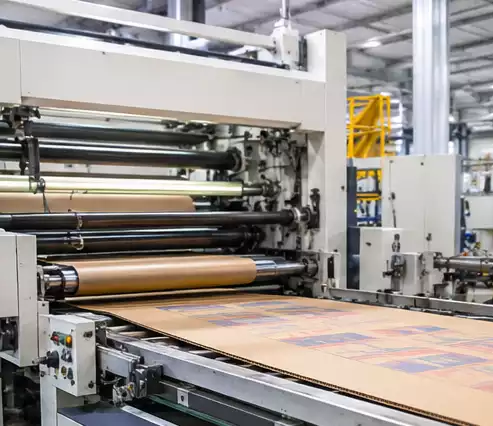
The condition of the blade will affect the quality of cutting and the mechanical stability. Worn or improperly maintained blades may result in rough edges, incomplete cutting or increased cutting resistance.
Although blade wear does not always directly cause length deviations, it does affect the overall performance of the cutting system.
5. Production Speed Variations
Speed of operation of the corrugated paperboard manufacturing machine is determined by various parameters including the grade of paper, type of board, as well as the orders of manufacture. There is need for the paper cutting machinery to adjust to these changes.
Inability of synchronization and control to keep up with these speed changes could lead to paper cutting discrepancies.
How to Control Cut-Off Accuracy During Production
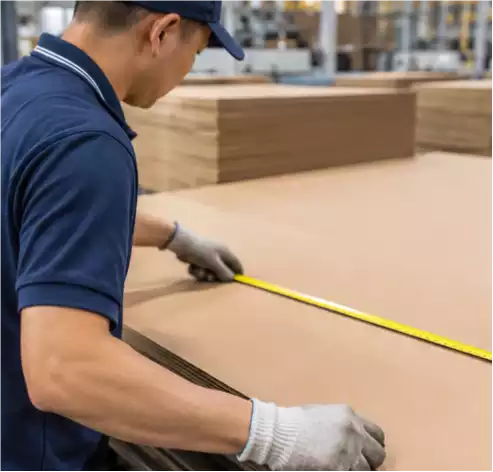
To achieve stable cutting lengths, proper equipment parameter settings and regular production inspections are indispensable.
- Verify cutting parameters: Before starting the machine, confirm the required board length as per the order; after switching orders, recheck if the parameters have been updated correctly.
- Test measuring components: Inspect measuring wheels, sensors, and other accessories to ensure accurate measurement of the paperboard as it moves.
- Conduct mechanical maintenance: Regularly inspect the drive, transmission, and cutting mechanisms to identify wear, looseness, and abnormal operation.
- Test finished product dimensions: Take samples at regular intervals for inspection and compare the measured dimensions with the standard tolerances.
- Recheck after speed adjustment: After adjusting the production line speed, confirm the synchronization of the cutting process and ensure the dimensions are within the acceptable range.
When deviations persist, operators should not simply manually modify the cutting length. They must also investigate the root causes of the measurement system, control parameters, and mechanical faults.
How Cut-Off Machine Design Supports Consistent Cutting
In addition to operating procedures, machine design plays an important role in maintaining cutting accuracy during continuous production.
A reliable cut-off system needs accurate board measurement, responsive drive control, stable mechanical transmission, and a cutting mechanism suited to the required production speed.
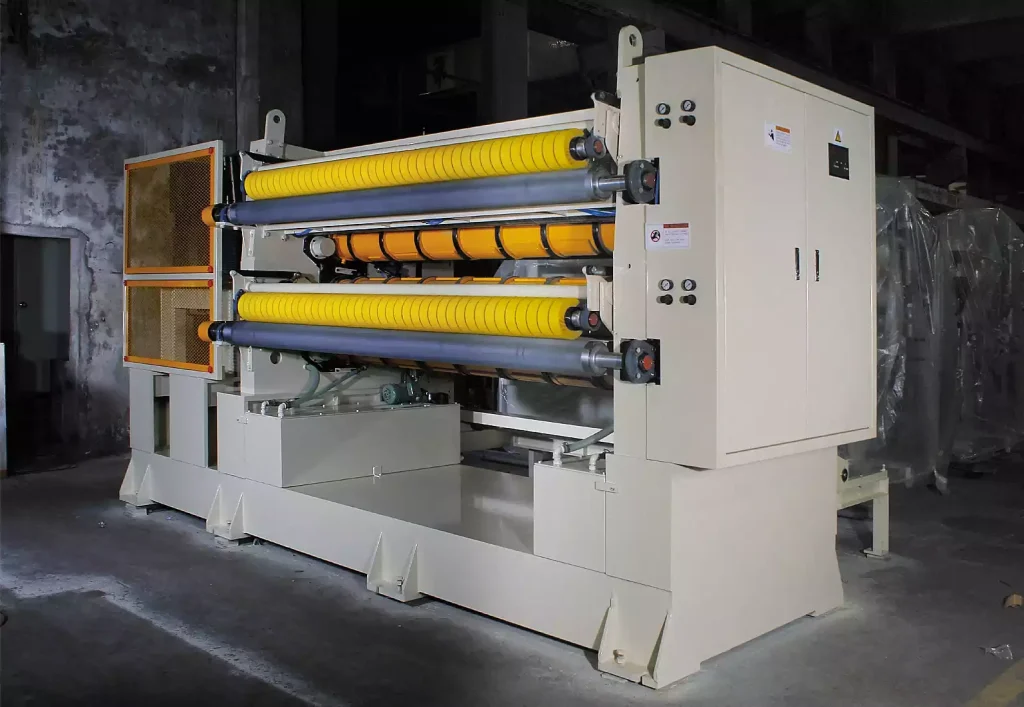
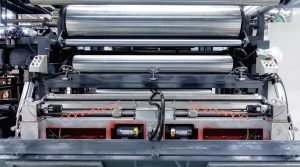
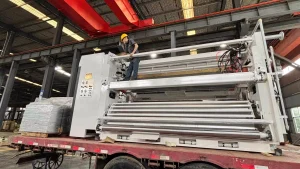
For example, Hsieh Hsu’s N.C. Helical Cut-Off (Double Drive) is designed for high-speed corrugated board production lines. Its dual AC servo drive system supports synchronized operation, while dual measuring wheels provide board length measurement for cutting control. The helical blade structure also helps achieve smooth cutting performance by reducing cutting resistance.
A precision of ±1.0 mm is quoted for the cutting accuracy of the machine, while up to 99 production orders can be stored at one time.
Therefore, the selection of an appropriate cut-off machine cannot depend only on the maximum speed of operation. The manufacturer should also assess the cutting accuracy, control response speed, production requirements, and compatibility with the existing corrugated paperboard production line.
FAQ
1. What is cut-off accuracy in corrugated board production?
It refers to how closely the actual cut sheet length matches the programmed cutting length.
2. What causes incorrect sheet cutting lengths?
Common factors include inaccurate speed measurement, incorrect cutting settings, mechanical wear, and poor synchronization between board movement and the cutting mechanism.
3. How can cut-off accuracy be checked during production?
Operators can measure sample sheets at regular intervals and compare their actual lengths with the specified dimensions. Repeated deviations should be investigated through the machine’s measurement and control systems.