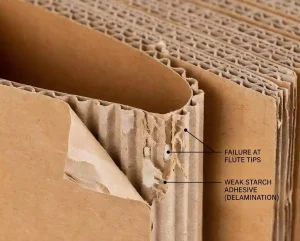
A corrugated box looks simple enough — two flat sheets with a wavy layer sandwiched in between. But that wavy layer, known as the flute, is doing more engineering work than most people realize. Flute type determines cushioning, stacking strength, printability, and material cost, and these four factors constantly pull against each other. There’s no single “best” flute — only the one that matches your product’s weight, shipping conditions, and branding needs. Following, we break down the five standard flute types and how to choose between them.
What Is a Corrugated Flute?
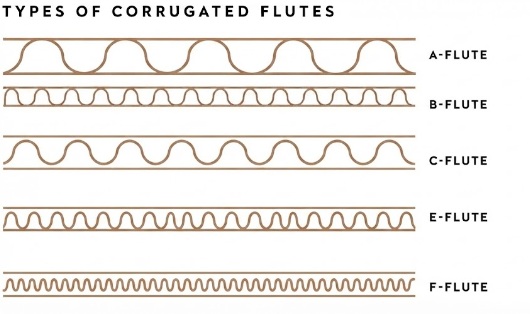
The corrugated medium is defined by two measurements: flute height, the peak-to-valley distance of the wave, and flute frequency, the number of flute peaks per linear foot or meter. Together, these two numbers determine everything about how a given flute performs — taller, less frequent flutes trap more air and cushion better, while shorter, denser flutes create a smoother, more rigid surface. These dimensions aren’t arbitrary either; measurement and testing of corrugated board thickness and strength are governed by international standards such as ISO 3034, which is why flute specifications stay consistent across manufacturers and regions rather than varying by whoever happens to be making the board.
The 5 Standard Flute Types Compared
| Flute | Height | Flutes per Meter (approx.) | Primary Strength |
| A-Flute | 4.5–5.0 mm | ~108 | Maximum cushioning |
| B-Flute | 2.5–3.0 mm | ~154 | Crush resistance, smooth print |
| C-Flute | 3.2–4.0 mm | ~130 | Balanced, general-purpose |
| E-Flute | 1.2–1.8 mm | ~300 | Fine print detail |
| F-Flute | 0.8–1.0 mm | ~410 | Premium, compact packaging |
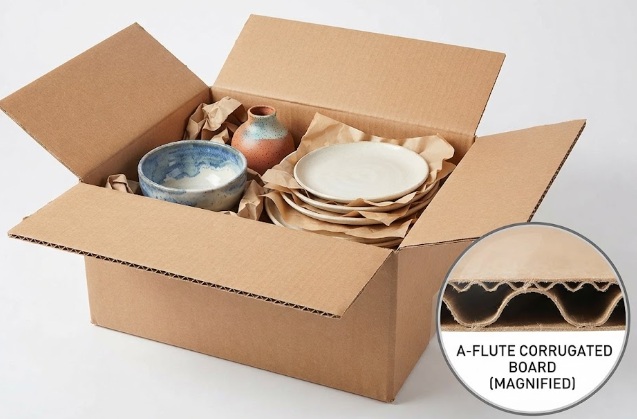
A-Flute: Maximum Cushioning
A-flute is the earliest, largest corrugated profile having a flute width of 4.5-5.0mm. This extra height provides larger air spaces inside that translates into better shock absorption and vertical compressive strength. This is the most popular flute for items that are delicate or impact sensitive like ceramics, glassware and industrial equipment, in which protection is more important than the size. It’s not the cheapest option, but it’s bulkier. A-flute boxes occupy more space for shipping than other types of standard flute and increase the cost of freight per unit.
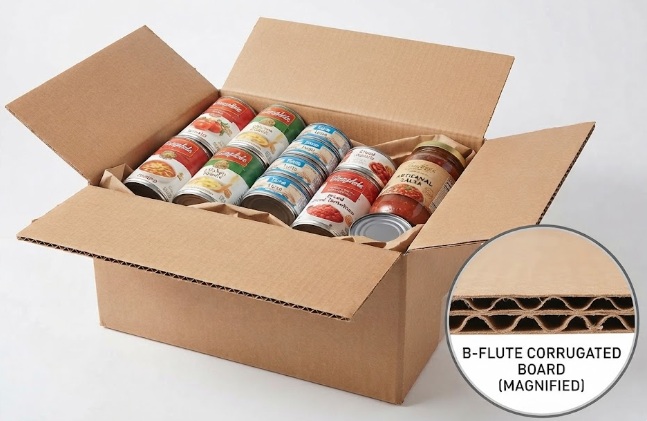
B-Flute: Crush Resistance and a Smooth Print Surface
B-flute swaps some cushioning height to create an even denser, tightly packed wave structure offering a robust resistance to puncture and crushing forces, as well as a smooth surface that can be printed on. This makes it a preferred choice for canned items as well as beverage trays as well as retail packaging in which the container must keep its shape while also presenting beautifully on shelves.
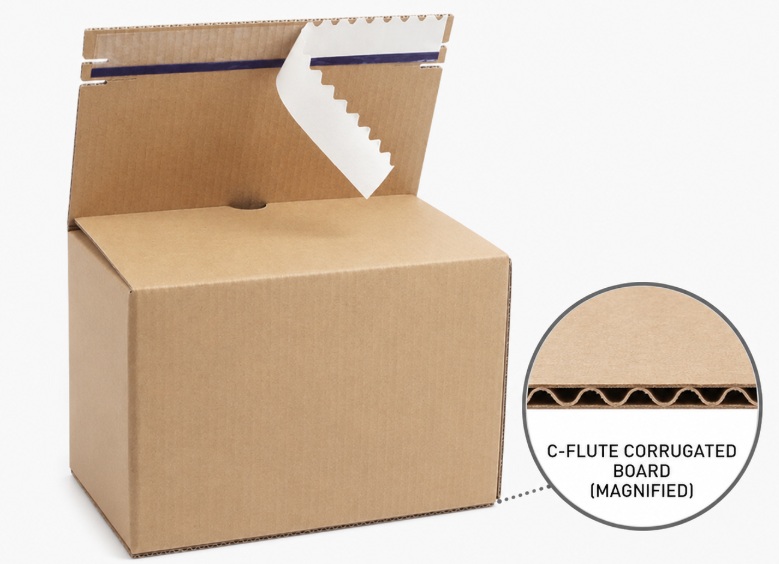
C-Flute: The Industry Default
C-flute is a perfect fit between B and A providing a balanced blend of stacking strength, cushioning and crush resistance – it’s versatility is shown through in the usage data C-flute makes up about 80% of all corrugated shipping containers that are produced worldwide. If there’s only one option for “which flute should I use,” C-flute is typically the one, and that’s the reason it is the most popular choice for all shipping boxes, boxes for e-commerce, and the standard packaging for products across all industries.
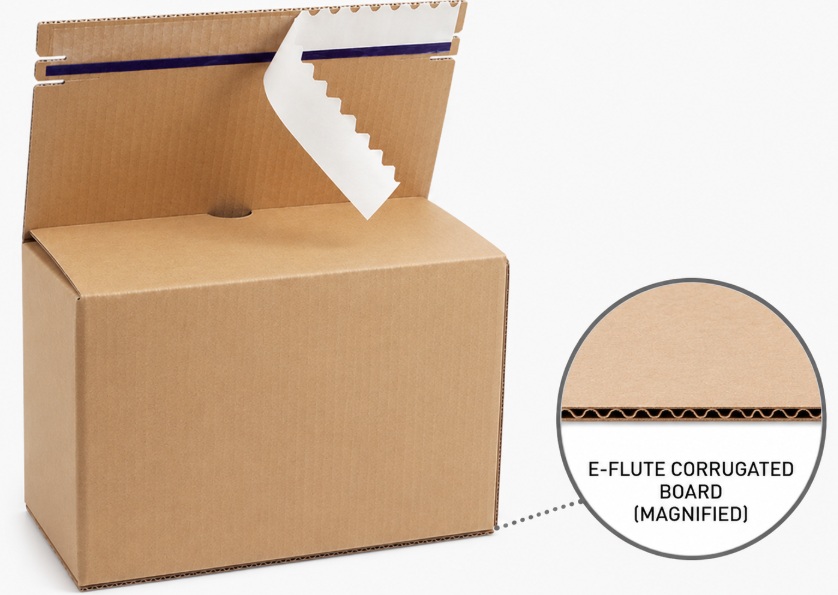
E-Flute: Built for Print Quality
E-flute was developed mainly so it keeps a smooth, even printing surface, but it also has enough structural backbone for packaging that actually looks retail-ready. Roughly 1.2–1.8mm tall, it’s a lot thinner than A or C flute, so it cuts down on total packaging size, while still giving you sharper and more detailed graphics. That’s why it’s usually the default option for cosmetics boxes, skincare packaging, electronics accessories, and branded e-commerce boxes, because the whole unboxing vibe matters almost as much as the protection inside.
F-Flute: The Micro-Flute for Premium Packaging
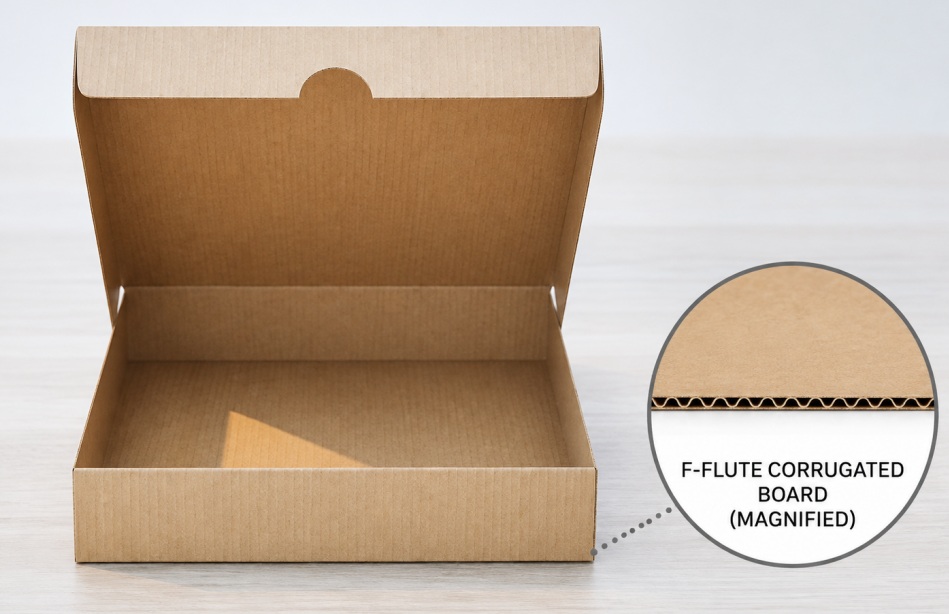
F-flute is the thinnest standard profile, typically 0.8–1.0mm, sometimes described as a “micro-flute” for its near-paperboard feel combined with the structural benefits of corrugated construction. Its fine, dense wave structure creates an exceptionally smooth, precise surface — well suited to premium, small-format retail boxes like perfume or luxury cosmetics packaging, where every visual detail of the box reflects on the brand.
How to Choose the Right Flute for Your Product
Rather than starting from the flute type, start from the product and shipping conditions, then work backward:
- Heavy or fragile products needing maximum shock absorption point toward A-flute.
- General shipping and e-commerce, where you want reliable, cost-efficient performance without overthinking it, point toward C-flute.
- Retail display and canned goods needing crush resistance and clean graphics point toward B-flute.
- Cosmetics, electronics accessories, and branded packaging prioritizing print quality point toward E-flute.
- Luxury and small-format retail wanting a premium, compact feel point toward F-flute.
Cost sensitivity also plays a role throughout this decision — larger flutes like A generally cost more per unit due to higher material use, while C-flute’s dominant market position typically makes it the most cost-competitive option to source at scale.
Combining Flutes: Double and Triple Wall Boards
Single flute types aren’t the only option — combining two flute profiles into a double-wall board lets manufacturers capture benefits from each. A BC-flute combo like this one, for example, combines C-flute’s crush resistance and B-flute’s cushioning to make the perfect board for larger items and more abrasive maneuvering than any flute can do on their own. In the same way, EB combinations match E-flute’s smooth surface for printing with B-flute’s additional rigidity, resulting in boards within the 4-4.5mm range that are ideal to ship heavier items and still allowing top-quality graphics. Triple-wall configurations push this further for extreme-load applications like industrial crating, stacking multiple flute layers for maximum compression resistance.
Why Flute Consistency Starts at the Corrugating Machine
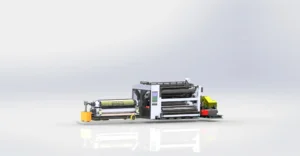
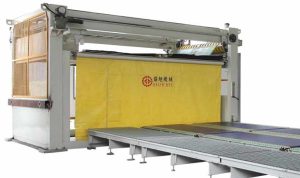
Choosing the right flute specification on paper is only half the equation — actually producing that flute consistently, shift after shift, depends entirely on the precision of the corrugating equipment doing the forming. Flute height and shape are determined by the corrugating roll’s tooth profile, and any inconsistency in roll gap control, preheating, or roll wear translates directly into flute variance that compromises the exact cushioning or print-surface performance a converter is trying to deliver.
This is precisely why corrugating roll design and gap precision matter as much as the flute specification itself. Hsieh Hsu Machinery‘s single facer equipment — including cassette-based systems capable of running A, B, C, and E flute profiles on a single platform — is engineered to maintain that consistency across flute types and production runs, giving corrugator operators the flexibility to serve varied order books without sacrificing the dimensional accuracy each flute type depends on.
FAQ
What’s the difference between B-flute and C-flute?
- B-flute is thinner (2.5–3.0mm) with better crush resistance and a smoother print surface, while C-flute (3.2–4.0mm) offers a more balanced mix of cushioning and stacking strength — which is why C-flute remains the more widely used general-purpose choice.
What are F-flutes typically employed to do?
- The F-flute’s slim, precise design is ideal for small-format, premium packaging for retail, such as cosmetics, perfumes and luxury products with an elegant, smooth surface is more important than the cushioning used for heavy-duty products.
Can one single facer produce multiple flute types?
- Yes — modern single facers with interchangeable or cassette-based corrugating roll systems can switch between A, B, C, and E flute profiles, letting a single machine serve a broader range of order specifications.
Which corrugated flute is most commonly used?
- C-flutes are the most extensively used standard flute in the world with around 80percent of shipping containers made from corrugated, thanks to its efficient cost-effectiveness and balanced performance.
Flute selection ultimately comes down to matching cushioning, strength, and print quality to what your product actually needs — but that selection only pays off if the equipment producing it can hold flute dimensions consistently across every run. For corrugator operations looking to run multiple flute profiles reliably on a single line, explore Hsieh Hsu’s single facer equipment built for exactly that kind of flexibility.