Depending on customer orders, a plant may need to switch between A, B, C, E, or other flute configurations. For a single facer, this means more than simply changing a production setting. The corrugating components, pressure conditions, glue application, and other operating parameters need to be matched to the new flute profile.
For plants that change flute profiles frequently, the way this changeover is designed can have a direct effect on downtime and production waste. This is one reason cassette-based and quick-change single facers have become an important consideration for corrugated board production.
What Is Involved in a Flute Profile Change?
A flute profile is determined primarily by the geometry of the corrugating rolls. Different profiles have different flute heights and pitches, so a single facer needs the appropriate roll configuration to form the desired corrugated medium correctly.
Changing from one flute profile to another therefore starts with changing the corrugating roll arrangement. However, the process does not necessarily end when the new rolls are installed. The relationship between the corrugating rolls, pressure roll, and glue application system must also be suitable for the new configuration.
The production conditions may need to be adjusted as well. Paper grade, moisture, production speed, heating conditions, and adhesive application can all influence how the new flute runs. The objective is not simply to produce the correct flute shape, but to achieve consistent bonding and stable single-face web quality.
This is why flute changeover can involve several stages:
Existing flute → Roll or cassette change → Mechanical adjustment → Trial running → Quality check → Stable production
The actual procedure varies according to the single facer design and level of automation. A machine designed for frequent flute changes can reduce the amount of manual work involved in this process.

Roll Change vs. Cassette Change
The method used to change the corrugating rolls has a significant influence on changeover time. Two common approaches are conventional roll changes and cassette-based configurations.
Conventional Roll Change
With a conventional arrangement, the corrugating rolls are removed from the single facer and replaced with another set when a different flute profile is required. Depending on the machine design, this can involve several mechanical operations, including removing the existing components, installing the new rolls, aligning them, and adjusting the relevant working conditions.
The main consideration is not necessarily the physical replacement of the roll itself. The complete changeover also includes the time required to make adjustments and bring the machine back to stable production.
For a plant that changes flute profiles only occasionally and runs long production orders, this may be perfectly practical. However, the accumulated downtime can become more significant when the production schedule contains many short orders.
Cassette-Based Change
A cassette-based single facer takes a different approach. Instead of handling the corrugating components individually during every changeover, the relevant roll assembly is mounted as a cassette that can be exchanged as a unit.
A spare cassette can also be prepared for another flute profile while the machine is running the current production order. When a change is required, the prepared cassette can then be installed, reducing the amount of setup work that needs to be completed inside the machine.
The advantage is therefore not simply that the roll can be replaced faster. A well-designed cassette system can reduce the overall changeover process, including mechanical adjustment and preparation time.
For manufacturers producing several flute profiles, this can provide greater production flexibility and help reduce interruptions between orders.
When Does Flute Changeover Become a Production Issue?

Not every corrugated board plant has the same need for fast flute changes. The importance of changeover depends heavily on how the production line is used.
Long Production Runs
Consider a plant that produces C flute for several hours before changing to another profile. If the same flute is used for a long production run, the time spent on a single changeover represents a relatively small portion of total production time.
In this situation, factors such as running stability, board quality, production speed, and overall machine configuration may be more important than minimizing every changeover.
A conventional roll-change arrangement can therefore still be suitable when flute changes are infrequent.
Frequent Order Changes
The situation is different for a plant handling many smaller orders.
For example, a production schedule might require:
C flute → B flute → E flute → C flute
If each change requires downtime, adjustment, and trial production, those periods can accumulate throughout the working day. The impact becomes even greater when production involves different paper grades, sheet widths, or board specifications at the same time.
This is where quick flute change becomes more than a convenience. It can affect the line’s effective production capacity.
The calculation is straightforward. If a plant changes flute four times per day and each complete changeover takes 20 minutes, that represents 80 minutes of changeover time per day. Over a 25-day production month, this would amount to more than 33 hours. This is only an example—the actual time depends on the equipment and production procedure—but it illustrates why frequent changeovers deserve attention when configuring a corrugator.
Startup waste should also be considered. After changing the flute, the machine may require some running time to reach stable quality. Faster changeover can therefore reduce not only downtime but also the amount of board produced during adjustment.
Related Articles: A, B, C, E, F Corrugated Flute: Choose the Right Flute Type for Corrugated Packaging
How Flute Requirements Affect Single Facer Configuration
The number of flute profiles a plant needs is an important consideration when selecting a single facer.
A manufacturer producing primarily one flute profile may have little reason to prioritize a complex quick-change arrangement. On the other hand, a plant supplying different packaging applications may need to switch between several profiles regularly.
The production schedule should therefore be considered alongside the flute requirements.
For example, a plant may need:
- One or two flute profiles with long production runs
- Several flute profiles with frequent order changes
- Multiple flute configurations for different board structures
- Fast switching between commonly used profiles
These scenarios can lead to different equipment requirements.
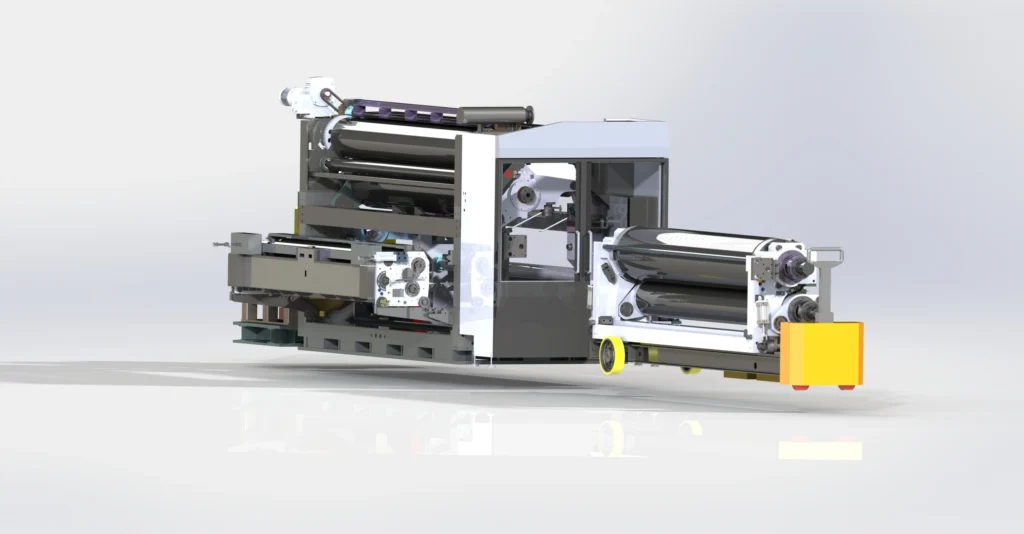
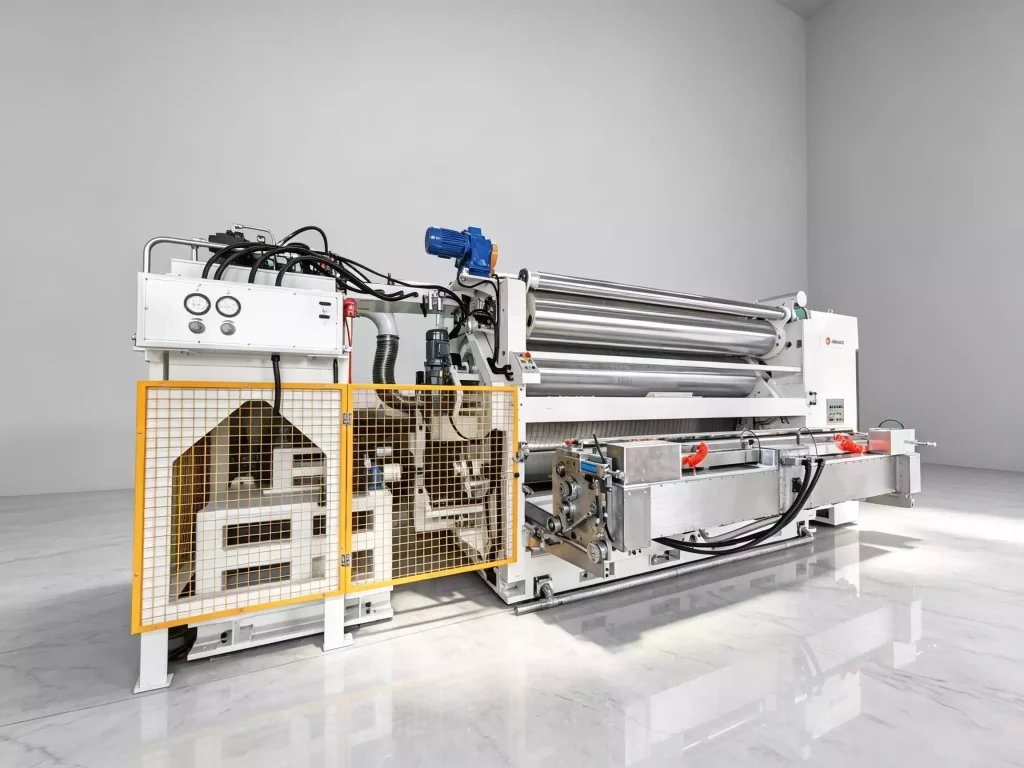
A multi-cassette single facer can be particularly useful when several flute configurations need to be available. Cassettes for different profiles can be prepared and kept ready for production, allowing the machine configuration to be changed without treating every flute change as a complete mechanical setup from the beginning.
This does not mean that a cassette system is automatically the right choice for every corrugated board manufacturer. The decision should reflect the plant’s actual product mix and production pattern. How many flute profiles are produced and how often they are changed can be just as important as the maximum rated speed of the machine.
Ultimately, flute changeover is a production consideration rather than an isolated mechanical operation. When profile changes are frequent, reducing the time required to move from one stable production run to the next can help a corrugated board plant make better use of its available production hours.