Unexplained flute crush marks, edge curling, and unplanned downtime on the single facer are three of the most common complaints in corrugated plants — and more often than not, the root cause traces back to one design choice: how the machine holds the medium against the corrugating roll. Two main technologies dominate the market today: vacuum (fingerless) guiding as well as traditional type finger-type guidance, and both shape the board’s quality, run speed, or maintenance loads in radically different ways. We go over how each one works and compare them side-by-side, and assist you in matching the appropriate technology to your production needs.
What Does the Single Facer Do in a Corrugated Line?
The single facer is where corrugated board is actually born: it forms flutes into the medium paper and bonds a liner to one side, creating single-face board that feeds into the double backer. Because every downstream step — gluing, pressing, drying — depends on how precisely the medium is held against the corrugating roll at this stage, the guiding mechanism isn’t a minor mechanical detail. It’s the single biggest factor separating consistent, high-strength board from a line plagued by warp and rejects.
How Finger-Type Single Facers Work
Finger-type machines use a row of metal “fingers” mounted along a bar to physically press the medium into the flutes of the lower corrugating roll as it rotates. It’s a proven, mechanically simple approach that has run reliably in corrugator lines for decades.
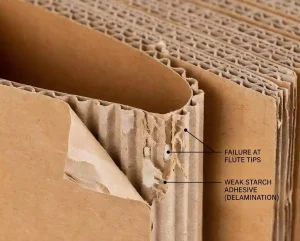
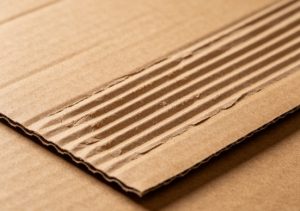
The trade-off shows up in maintenance and forming quality. Industry troubleshooting guides note that inadequate finger adjustment, a bent finger bar, or a finger radius mismatched to a reconditioned roll are among the most frequent causes of forming defects on these machines. Because the fingers make direct physical contact with the flute tips, they can also leave faint marks or snag thinner, lower-basis-weight mediums — an issue that becomes more visible as customers demand cleaner board surfaces.
How Vacuum (Fingerless) Single Facers Work
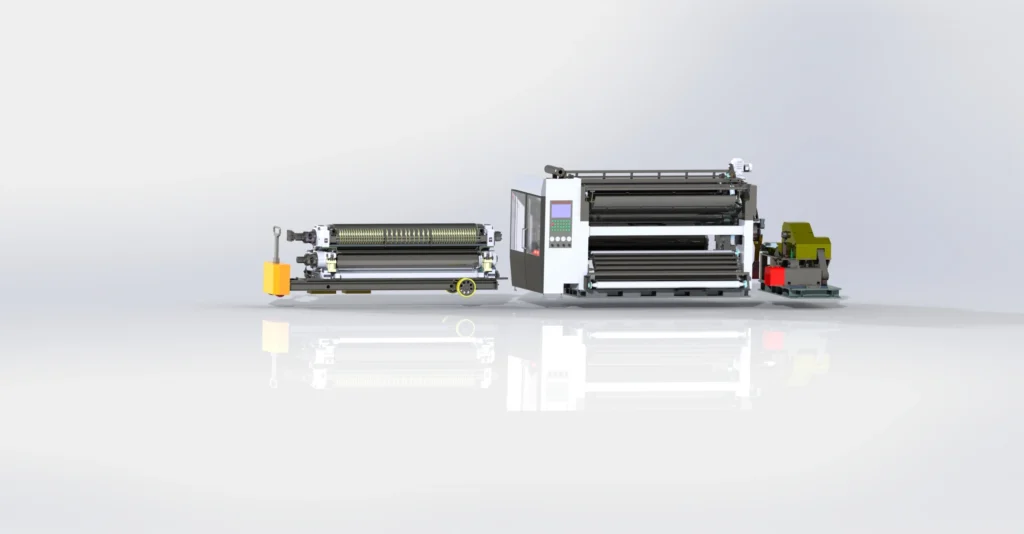
Vacuum single facers replace mechanical fingers with a negative-pressure zone built into the lower corrugating roll. As the medium wraps around the roll, suction slots — typically no wider than about 2mm — hold the paper flat against the roll face across roughly a 180° arc, guided by an air-control system that keeps flute formation stable even at high speed. Because nothing physically touches the flute tips, forming is cleaner and more consistent, particularly on lighter papers and narrower webs.
The known weak point is the vacuum system itself. The main weakness can be found in the vacuum unit the vacuum system itself. Suction slots and internal fan are sensitive to dust from paper and fiber dust, particularly with recycled-content media. This will gradually decrease suction power and require cleaner cycles more frequently when the system isn’t properly filtering.
Vacuum vs. Finger-Type: Side-by-Side Comparison
| Criteria | Finger-Type | Vacuum / Fingerless |
| Flute-tip marking | Higher risk (direct contact) | Minimal (no contact) |
| High-speed stability | Good, roll/finger-dependent | Strong — engineered for speeds up to ~350 m/min on modern units |
| Sensitivity to paper dust | Low | Higher — vacuum ports need regular cleaning |
| Maintenance focus | Finger bar alignment, wear, radius matching | Vacuum pump/fan health, slot cleaning |
| Best paper range | Wide range, forgiving of variation | Excels with light-to-mid basis weights |
| Typical cost position | Lower upfront investment | Moderate-to-higher upfront investment |
Pros and Cons at a Glance
Finger-Type
- Mechanically simple and easier to service in the field
- Generally lower upfront cost
- More tolerant of dusty, less-controlled paper stock
- Higher risk of flute-tip marks and finger-related defects over time
Vacuum / Fingerless
- Cleaner, mark-free flute formation
- Stable web guiding at higher running speeds
- Reduced snagging risk on lighter mediums
- Requires disciplined dust/debris management to protect the vacuum system
Which One Should You Choose?
High-speed, high-volume lines: Vacuum/fingerless systems are generally the better fit — their stable guiding is specifically engineered to hold performance as speeds climb.
Plants running frequent flute changes across varied board types: Look at how the vacuum or finger system is packaged with the corrugating roll assembly; cassette-style designs that allow rapid roll-set swaps matter more here than the guiding method itself.
Older facilities or high-dust environments: If your compressed air and filtration infrastructure isn’t well maintained, a well-adjusted finger system may run with fewer surprises, though at the cost of forming quality on lighter papers.
Budget-conscious or smaller operations: Finger-type machines remain a legitimate, cost-effective choice for many box plants that don’t require premium surface quality or top-end speeds.
Industry Trend: Why More Lines Are Moving Toward Vacuum and Positive-Pressure Fingerless Design
Major corrugator builders have increasingly engineered around the limitations of traditional vacuum systems rather than away from fingerless guiding altogether. Some manufacturers, for instance, have developed positive-pressure fingerless technology specifically to eliminate vacuum systems’ sensitivity to debris while retaining mark-free forming. This shift reflects a broader industry direction: buyers want the surface quality and speed benefits of fingerless guiding, without inheriting its historical maintenance headaches.
Hsieh Hsu’s Approach: Multi-Cassette Positive Pressure Single Facer
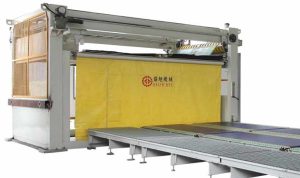
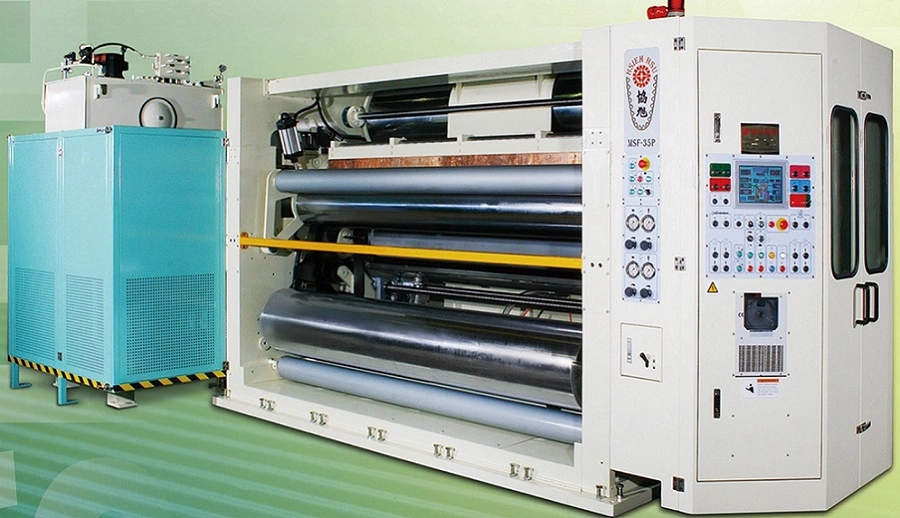
Hsieh Hsu’s Multi-Cassette Positive Pressure Single Facer reflects this same evolution. It combines a positive-pressure fingerless design — avoiding the debris sensitivity of conventional vacuum systems — with a multi-cassette roll configuration that allows faster flute changeovers than fixed-roll machines. For plants that want fingerless forming quality without sacrificing the flexibility to switch flute profiles quickly, it’s built to bridge exactly the trade-off outlined above.
FAQ
Is a vacuum single facer better than a finger single facer?
Neither is universally “better” — vacuum/fingerless systems generally win on forming quality and speed, while finger-type machines offer simpler maintenance and lower cost.
What causes marks on corrugated flute tips?
Most commonly, direct contact from misaligned or worn guide fingers, or an incorrect finger radius after roll reconditioning.
How often does a fingerless single facer need maintenance?
It depends heavily on paper dust levels; plants running recycled mediums should plan for more frequent vacuum-port and fan cleaning than those running virgin kraft.
Can vacuum single facers run high-GSM or recycled paper?
Yes, but performance depends on filtration quality — heavier dust loads from recycled fiber require more robust vacuum maintenance to sustain suction.
Choosing between vacuum and finger-type single facer technology comes down to matching the machine to your paper stock, speed targets, and maintenance capacity — not simply picking the “newer” technology. If you’re evaluating a new single facer or upgrading an existing corrugator line, Hsieh Hsu’s engineering team can help assess your production requirements and recommend the right configuration, including cassette-based fingerless options.