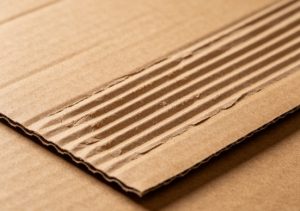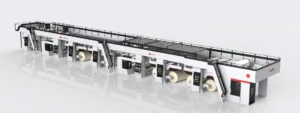
Delamination of corrugated board takes place when there is no formation of good bonding between the liner and the corrugated medium. This problem varies from easy peeling off of a limited area to the separation of the liner and the flute tips. Apart from making the board weak, delamination affects operations such as printing, folding, and die cutting.
What causes delamination in corrugated board? The answer is rarely a single factor. Adhesive application, starch adhesive properties, paper moisture, heat, pressure, and production speed can all affect bonding performance. In many cases, delamination is the result of an imbalance between several process conditions rather than simply a problem with the adhesive.
Understanding where and when the bonding failure occurs is therefore an important first step toward solving it.
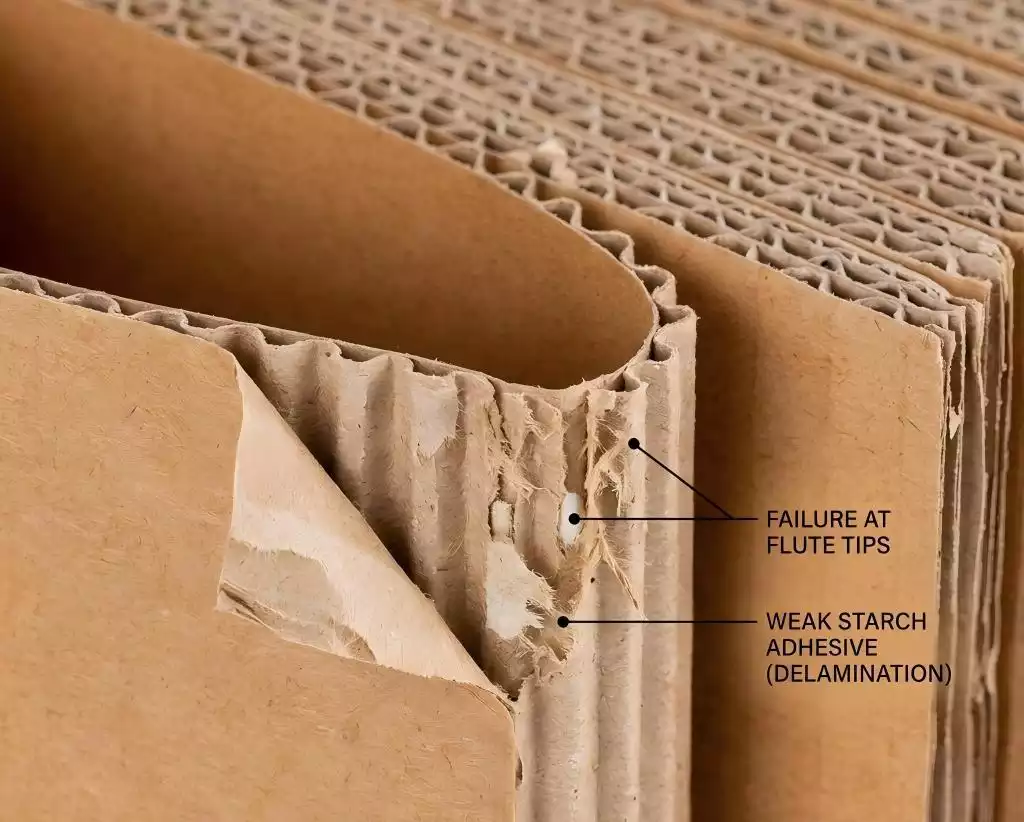
What Does Corrugated Board Delamination Look Like?
Delamination can appear in several different forms depending on where the bonding process has become unstable.
One of the most frequent signs is the separation of the liner from the tips of the flute due to flexing, handling, or pulling apart of the sheet. Some sheets could display poor bonding over a wide range of area while other sheets would display certain portions where the liner is separated more easily.
The time of occurrence can be another important factor that might give us an idea. If the single-face board is not properly glued even before being passed through the Double Backer process, then there might be some problem with the Single Facer process, gluing process, or the paper itself. If the single-face board is good but the board gets separated after passing the Double Backer process, then the other factors should be considered.
What Causes Delamination in Corrugated Board?
Adhesive Application
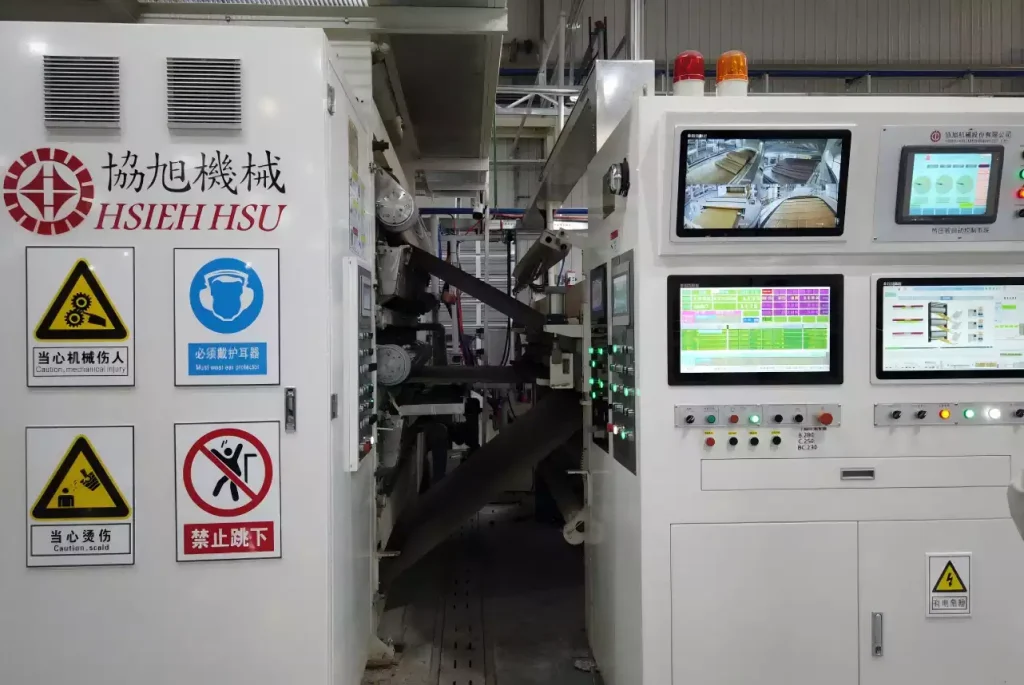
Insufficient or uneven adhesive application is one of the most common causes of weak bonding. If the flute tips do not receive enough adhesive, some areas may not develop sufficient contact with the liner. Uneven glue distribution can produce localized weak points even when the average glue consumption appears normal.
Glue roll condition, roll gap, adhesive flow, and application consistency should therefore be checked before assuming that the adhesive formulation itself is the problem.
Starch Adhesive Properties
Starch adhesive needs to develop the right bonding characteristics under the actual production conditions. Factors such as viscosity, solids content, gel temperature, adhesive condition, and contamination can influence how the adhesive spreads and develops bond strength.
An adhesive that works well under one combination of paper grades and machine settings may not perform the same way when production conditions change. This is why adhesive performance should be considered together with machine and paper conditions.
Paper Moisture and Condition
Paper moisture has a direct influence on corrugated board bonding. Excessive moisture can make it more difficult for the adhesive system to develop a stable bond, while overly dry paper may behave differently during heating and adhesive penetration.
More importantly, moisture variation between or across liner and medium can create inconsistent bonding. Changes in paper grade, storage conditions, or incoming paper batches should therefore be considered when delamination appears unexpectedly.
Heat and Temperature
Heat is essential for developing the bond, particularly when starch-based adhesives are used. Preheaters, corrugating rolls, and the Double Backer all contribute to the thermal conditions required during production.
Insufficient or uneven heat can prevent the adhesive from developing adequate bond strength. However, simply increasing temperature is not always the solution. Excessive heat can alter paper moisture and create other quality problems. The goal is stable and appropriate heat transfer rather than the highest possible temperature.
Pressure and Production Speed
Adequate pressure helps maintain contact between the liner and flute tips while the adhesive develops its bond. Insufficient pressure may leave weak contact areas, while excessive pressure can damage the flute structure or contribute to crushed flutes.
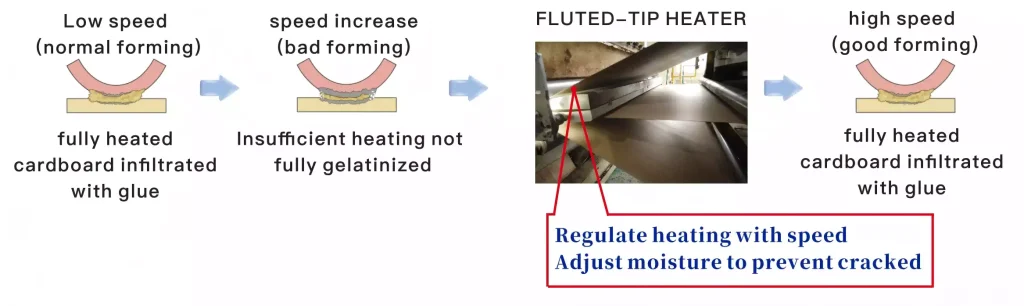
Production speed also changes the conditions under which bonding takes place. At higher speeds, the adhesive has less time to develop the required bond while the board passes through the heating and pressing sections. If delamination starts after increasing line speed, the adhesive application, heat, pressure, and overall process balance should be reviewed together.
How to Improve Corrugated Board Bonding
Improving corrugated board bonding starts with keeping the main process variables stable.
First, maintain consistent adhesive application rather than focusing only on total glue consumption. The adhesive should be distributed evenly across the required bonding area.
Second, keep liner and medium moisture within a suitable and consistent range. Large moisture differences between paper batches can make otherwise stable machine settings produce different bonding results.
Heat and pressure should also be matched to the paper grades, adhesive system, flute profile, and production speed. When line speed increases, the rest of the bonding process may need to be adjusted accordingly.
Regular inspection of glue rolls, corrugating rolls, pressure components, and other contact surfaces is equally important. Wear or poor adjustment can gradually reduce bonding consistency without creating an obvious machine fault.
Finally, when troubleshooting, avoid changing several parameters at once whenever possible. Adjusting one variable at a time makes it easier to identify the actual cause of delamination.
How Corrugator Equipment Affects Bonding Quality
Corrugator equipment plays an important role in maintaining stable bonding conditions.
The Preheater helps control the moisture and thermal condition of the paper before it enters subsequent bonding processes. Stable preheating can help maintain more consistent paper behavior during production.
The Glue Machine directly affects adhesive application. Consistent glue distribution and proper adjustment of the glue system are essential for reliable contact between the flute tips and liner.
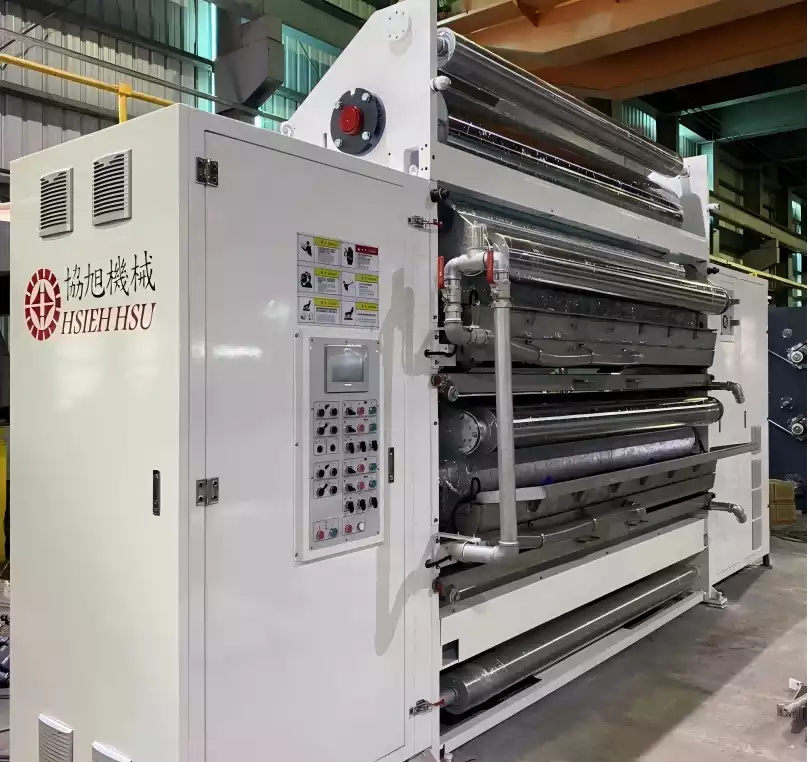
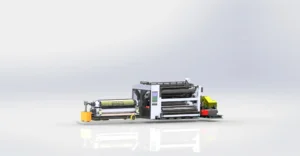
The Single Facer forms the flute and creates the initial bond between the corrugated medium and liner. Problems at this stage can already appear as weak single-face board before the final bonding process.
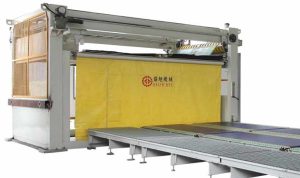
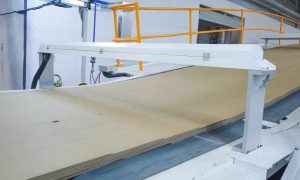
The Double Backer completes the bonding between the single-face web and the outer liner. Its combination of heat, pressure, belt contact, and production speed has a major influence on final board bonding.
For this reason, delamination should not automatically be treated as an adhesive problem. The condition and adjustment of the entire corrugating process should be considered.
Corrugated Board Delamination Troubleshooting Checklist
| Delamination Symptom | Check First | Possible Causes |
| Weak bonding across the entire sheet | Adhesive, heat, and pressure | Insufficient adhesive, inadequate heat, improper pressure |
| Delamination in localized areas | Glue distribution and paper condition | Uneven adhesive application or moisture variation |
| Delamination mainly along the edges | Glue coverage and pressure | Uneven glue application or inconsistent contact |
| Bonding becomes worse at higher speed | Speed, heat, and adhesive application | Insufficient bonding time or unstable process conditions |
| Single-face board already has weak bonding | Single Facer and adhesive system | Poor glue application, flute formation, or paper condition |
| Single-face board is good but finished board delaminates | Double Backer, heat, and pressure | Inadequate heat, pressure, or final bonding conditions |
| Problem changes between paper batches | Liner and medium condition | Moisture, surface characteristics, or paper quality |
A systematic approach is usually more effective than making multiple adjustments at the same time. By checking the bonding pattern, adhesive application, paper condition, heat, pressure, and production speed in sequence, manufacturers can identify the source of delamination more efficiently and maintain more consistent corrugated board quality.