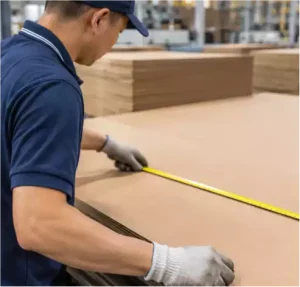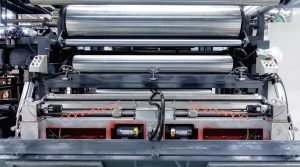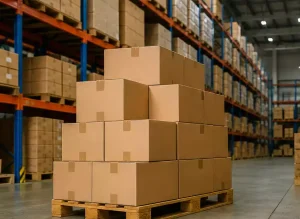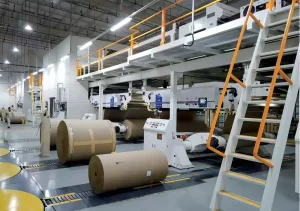
Two corrugator lines may handle the same paper and the same customer orders. Still, one can chew up more board, more time, and more effort. It is the consistency of the line that runs. This is exactly what automation is changing in the corrugated board production. Smart corrugator lines turn operators’ know-how into repeatable control that reduces waste at order changes, steadies speed and gives managers data they never had. We’ll tell you what “smart” really means, where it pays off and what you should check before you spend.
What Is a Smart Corrugator Line?
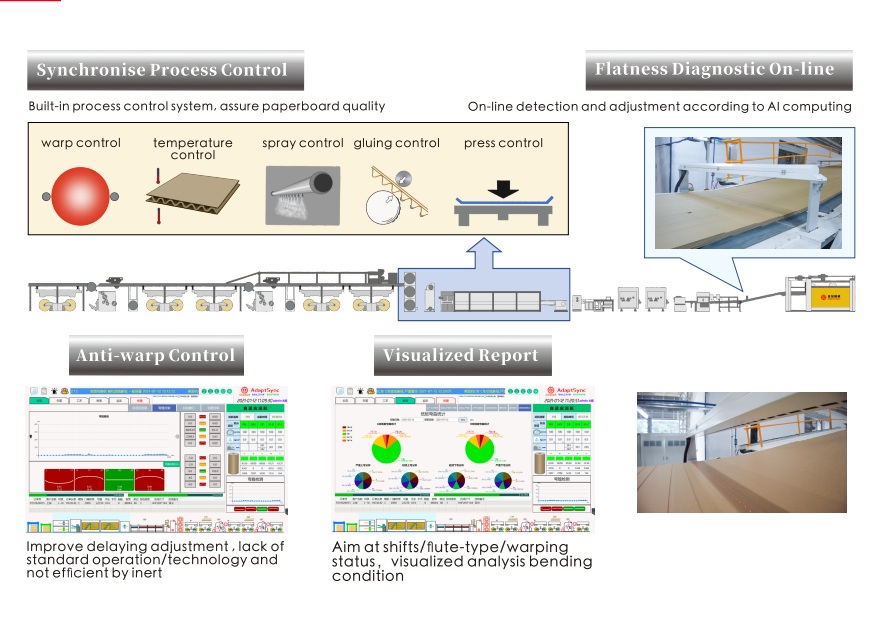
A smart corrugator line is a complete corrugated production line, where process control, data collection and coordinated scheduling are added to the traditional mechanical equipment. Standard automation makes a single machine run itself. A smart line makes the whole line work together, from the mill roll stand to the downstacker.
The underlying process has not changed. Paper is unwound at the wet end, formed into fluted medium on the single facer, glued to liners at the double backer, then slit, scored, cut to length, and stacked at the dry end. If you want the full walkthrough, see our guide on how corrugated board is manufactured. What changes is who, or what, makes the thousands of small decisions along the way.

Where Traditional Lines Lose Money
Most losses on a manually run line happen at transitions. Every order change counts because a corrugator is fast and expensive. The scale can be shown by a U.S. patent on a zero-waste order change system. Its example is a 15-second changeover losing about 150 linear feet of board, or 1,200 square feet. This is an old patent and simplified example, but the principle remains.
Setup time adds to the cost. In a study of a Lebanese box plant, researchers Zouein and Diab observed that changing a linerboard roll width took about 12 minutes on average, and changing the fluting type about 10. TAPPI reports that side and end trim is the second largest component of controllable corrugator waste and that a major contributor to it is scheduling.
When you add to this the dependence on experienced operators, who set speeds by feel and who are getting harder and harder to hire and replace, the case for automation is clear.
Five Ways Automation Is Changing Corrugated Board Production
1. Automatic Order Changes
Order changes are where automation delivers its most visible return. Erhardt+Leimer, a major supplier of web-guiding and automation systems, describes its SmartLine CORR system as triggering the dry end order change at exactly the right moment, particularly on digitally pre-printed rolls carrying several jobs. Mistimed changes, the company notes, create disproportionately expensive waste. Software vendor Amtech claims automation can cut waste by 0.25% to 0.50%. That is a vendor figure and results vary by plant, but on a high-volume line even fractions of a percent add up.
2. Speed Control While Running
Operators do not have to set the speed by guesswork. The line can start on its own once the work area is ready. Then it can raise or lower speed when the situation changes. Systems from Hsieh Hsu use this style of control for smooth running. It can also cut the stop and go losses that reduce output and harm board quality.
3. Easier Work for the Team
With full-process control, the line can be run to a steady set of results. This does not rely on the instincts of a few senior staff. Many plants are dealing with older workers or fast staff changes. In those cases, upgrading is a strong move. It does not take people out of the work. It makes the job easier to learn and can reduce how long training takes.
4. Real-Time Performance Data
A lot of plants can track what they make, but they miss what they lose. New smart lines can show live KPI views. These screens track line speed, downtime, and scrap. That way, managers notice faults early, not after output is hit. Some also put focus on reporting and off-site checks. The goal is to spot trouble before it turns into a production issue. Once the numbers are in view, changes are easier to judge.
5. Energy and Material Savings
Better control means less over-running, fewer stops, and more efficient use of paper and steam. Hsieh Hsu’s work with Senxin Packaging Group, which involved six production lines, combined adaptive cruise control with a digital management platform and energy-saving upgrades, and improved paper utilization.
Smart Lines in Real Factories
The same logic plays out in different markets. In Indonesia, APP Sinar Mas Group worked with Hsieh Hsu on a digital benchmark factory with less manual dependence and visualized reports across two lines. A Russia-based group unable to source European equipment found an intelligent line that helped overcome labor shortages and boost efficiency on heavy-grammage board. In Taiwan, Chia Ho Packaging replaced its aging Japanese lines with an intelligent system to address the aging workforce and to plan for durability for the next two decades.
The drivers are different, from digitalization to supply availability to labor, but all four plants wanted consistency that wasn’t dependent on a handful of people.
What to Check Before Investing
Decide if your current line can be improved or if a new one is the better option. Then check the control setup and how it links to your ERP and your scheduling tools. Automation only helps when the work orders are correct and on time. Also look closely at mechanical stability. Smart control can’t fix a line that runs unevenly. Our article explains why a mill roll stand affects corrugator line stability. Finally, request operating data from similar-sized customers from suppliers and check what installation, training and local support are included. We talk more about this in our guide to choosing the right corrugator line.
What Automation Will Not Fix
Automation can help, but it does not fix every issue. It will not fix a low paper grade. It also cannot undo a maintenance job that got skipped. On top of that, messy shifts do not clear up by themselves.
Your results will depend on how your factory runs. If you deal with many small orders, faster changeovers often matter more. If you mostly run long batches of the same product, the gain can feel smaller.
Final Thoughts
Automation makes good practice repeatable in corrugated board production: less wasted meters at order changes, more stable speeds and better data for decisions. With over 45 years of experience in corrugator manufacturing and production bases throughout Asia, Hsieh Hsu Machinery provides single machines and complete lines. Planning an upgrade? Contact our team with details of your line type, configuration and budget for a tailored proposal.